History of Samara
Foundation of Samara
For the first time, the name of the Samara River was mentioned in the notes of the secretary of the Arab embassy and traveler Ahmed ibn Fadlan as “Samur” in 921. In 1586, by the decree of Tsar Feodor I Ioannovich, the fortress named “Samarskiy gorodok” (literally “the town of Samara”) was founded on the bank of the Samara River near its confluence with the Volga.
Its main purpose was to control the vast territory of the middle reaches of the Volga and the mouth of the Samara, to protect Russia from the raids of nomads, and to provide a waterway from Kazan to Astrakhan.
During the 17th century, the fortress grew and continued to fortify. In 1688, it was renamed and became the town of Samara. After the devastating fires of 1700 and 1703, a new (so-called “earthen”) fortress was built in Samara in 1704-1706. In the 1740s, Samara became the center of the Orenburg expedition, which founded the towns of Orenburg and Stavropol-on-Volga (present-day Tolyatti).
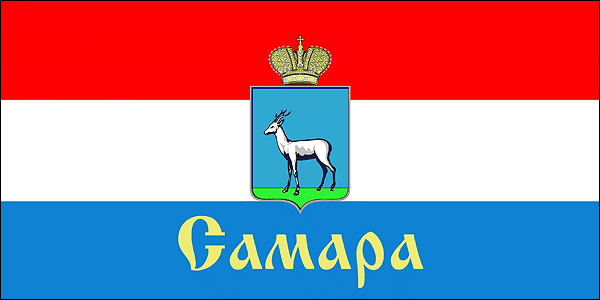
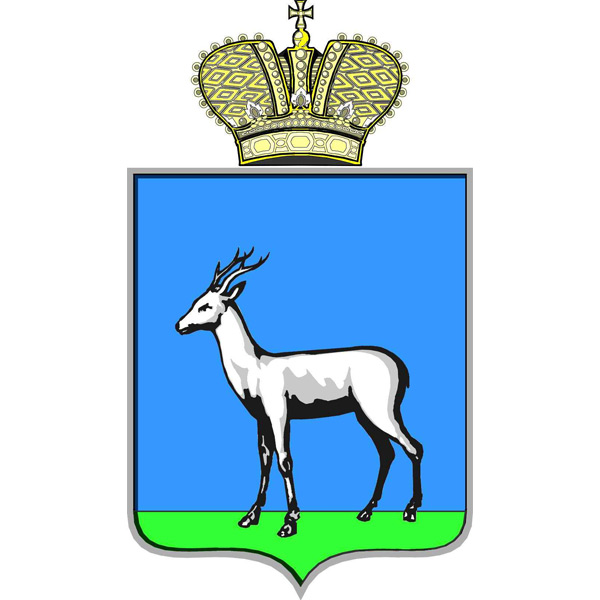
In 1780, the coat of arms of Samara was approved with the following description: “A wild white goat standing on the grass in a blue field”. The image of the coat of arms exactly repeated the banner of the Samara regiment from the collection of banners of the regiments of the Russian Empire (1729-1730). In 1782, the first site plan for the town’s development was approved.
More Historical Facts…
Samara in the 19th - the first half of the 20th centuries
In 1850, Emperor Nicholas I issued a decree on the creation of the Samara Governorate with the center in Samara. The population of the town was about 15 thousand people. By the end of the 19th century, it increased to 90 thousand people. By 1916, about 150 thousand people lived in Samara.
During this period, the Samara Governorate ranked first in the Russian Empire in terms of the amount of harvested wheat. In 1874, the construction of the Orenburg Railway began. In 1877, it passed through Samara. The Samara pier was one of the best on the Volga River. In 1915, the first electric tram started operating.
In 1928, Samara became the center of Middle Volga Oblast. In 1929, it was transformed into Middle Volga Krai. In 1935, the region was renamed Kuybyshev Krai. In December 1936, after secession from the region of the Mordovian Autonomous Soviet Socialist Republic, it was transformed into Kuybyshev Oblast. On January 27, 1935, Samara was renamed Kuybyshev, in honor of the Soviet statesman and party leader V.V. Kuybyshev (1888-1935).
In July-October 1941, during the Second World War, a number of enterprises from the western regions of the USSR and their personnel with their families were evacuated to this city, as well as The Council of People’s Commissars of the Soviet Union (the highest collegial body of executive and administrative authority), The Supreme Soviet of the Union of Soviet Socialist Republics (the most authoritative legislative body), diplomatic missions, large cultural institutions (for example, the Bolshoi Theater, Mosfilm). This city became, in fact, the second capital of the USSR after Moscow.
A special underground bunker-residence was built for Stalin, the Supreme Commander-in-Chief. However, the Headquarters of the Supreme High Command, the State Defense Committee (the highest authority in the country), and the General Staff of the Red Army remained in Moscow. On March 5, 1942, Shostakovich’s Seventh Leningrad Symphony was completed and performed for the first time in Kuybyshev.
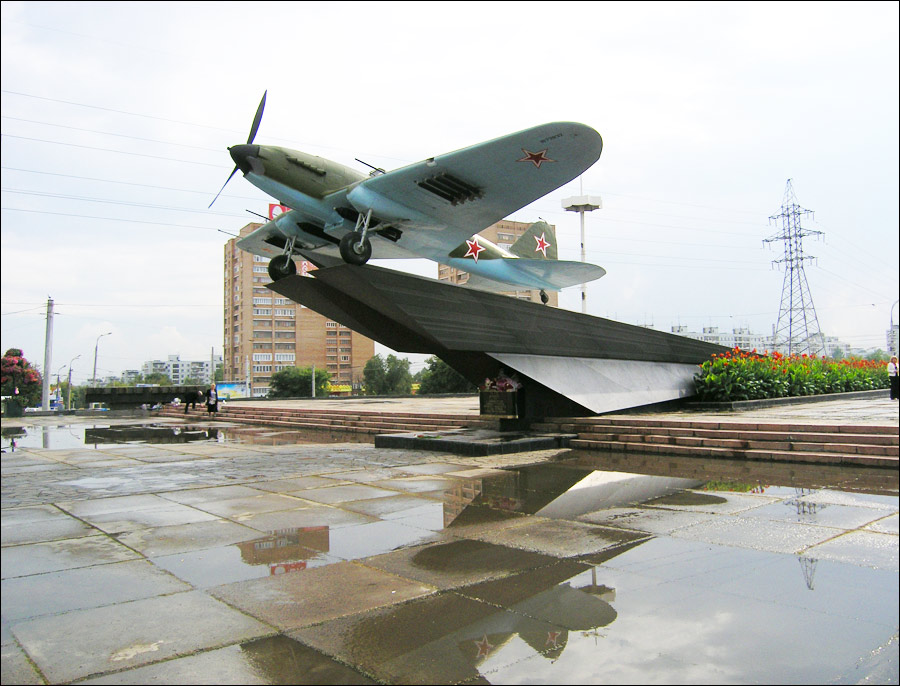
From 1940 to 1945, the level of industrial production in the city increased 5.5 times. The population grew from 400 to 600 thousand people. During the war years, about 28 thousand Il-2 and Il-10 attack aircraft were produced at its factories - about 80% of their total number.
Samara in the second half of the 20th century and beyond
After the Second World War, Kuybyshev became one of the largest industrial and cultural centers in the USSR. The city economy was based on the aviation, space, machine-building, metallurgical, electrical, cable, oil refining, and light industries. From 1960 to 1991, because of the large number of military enterprises, Kuibyshev was a city closed to foreigners.
All Soviet and Russian cosmonauts were launched into space on R-7 launch vehicles produced by the Samara enterprise “TsSKB-Progress” (JSC “Space Rocket Centre “Progress”). This also applies to the first cosmonaut of the planet Yuri Gagarin. After landing in the area of the city of Engels, he was taken to Kuybyshev for rest. From here he reported by phone to the head of state N.S. Khrushchev on the successful completion of the first manned space flight in the history of mankind.
In addition to the development of industry, there were significant changes in the socio-economic development of the city. On September 14, 1967, the millionth resident was born in Kuybyshev. In 1968, the TU-154 aircraft began to be mass-produced in Samara. In 1987, the city reached its maximum population of 1,280,000 people.
On January 25, 1991, the historical name Samara was returned to the city. In the 1990s, after the collapse of the USSR, the problem of transforming military enterprises for the production of civilian products arose. A lot of large enterprises went bankrupt. Small-scale production of goods appeared in their place, as well as shopping centers and various cultural institutions (clubs, movie theaters, bars, restaurants, etc.). The loss of jobs, the slowdown in economic growth had a negative impact on the demographic situation and the state of the city’s infrastructure.
In the 2000s, the construction segment was actively developing in Samara. At the same time, there was no general strategy for building the city, which eventually led to a deterioration in the general architectural style of the city and the quality of the infrastructure. In 2018, six matches of the FIFA World Cup were held in Samara.
Samara views
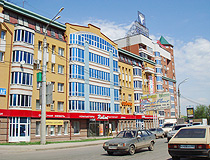
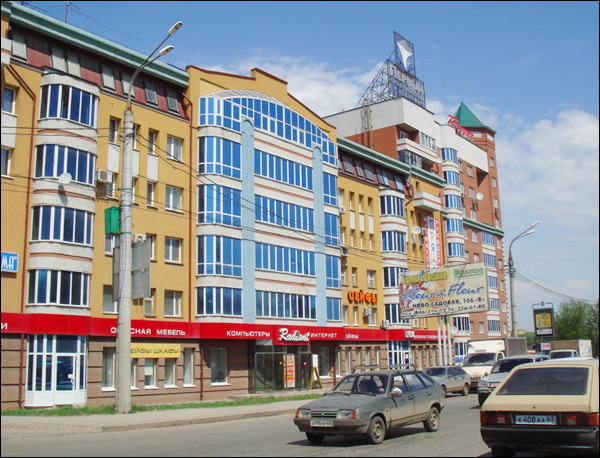
Modern architecture in Samara
Author: Roman Komissarov
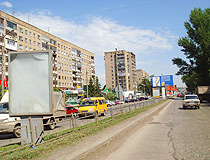
Apartment buildings in Samara
Author: Roman Komissarov
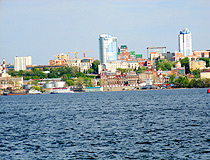
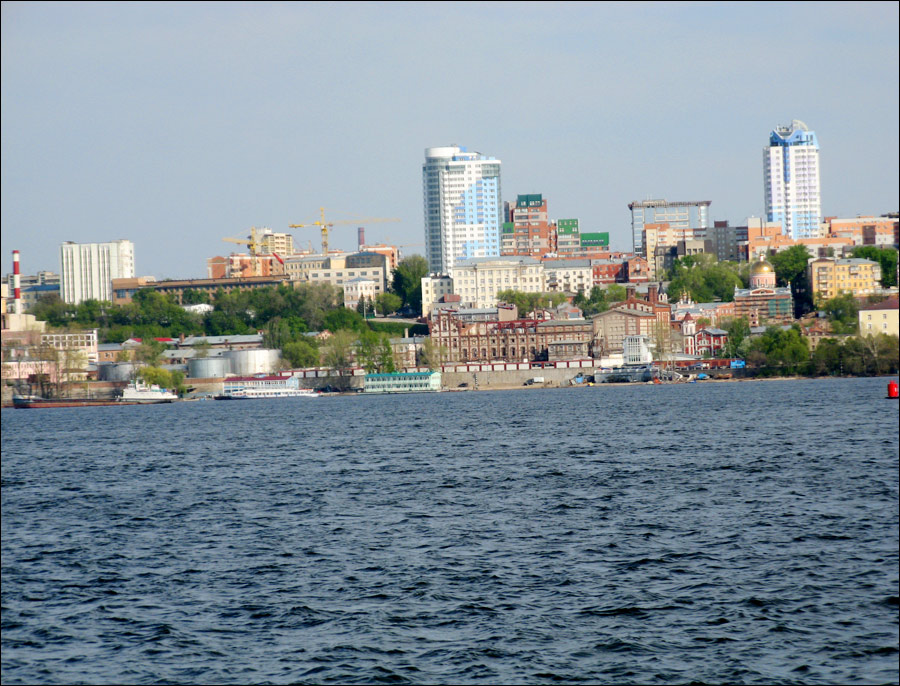
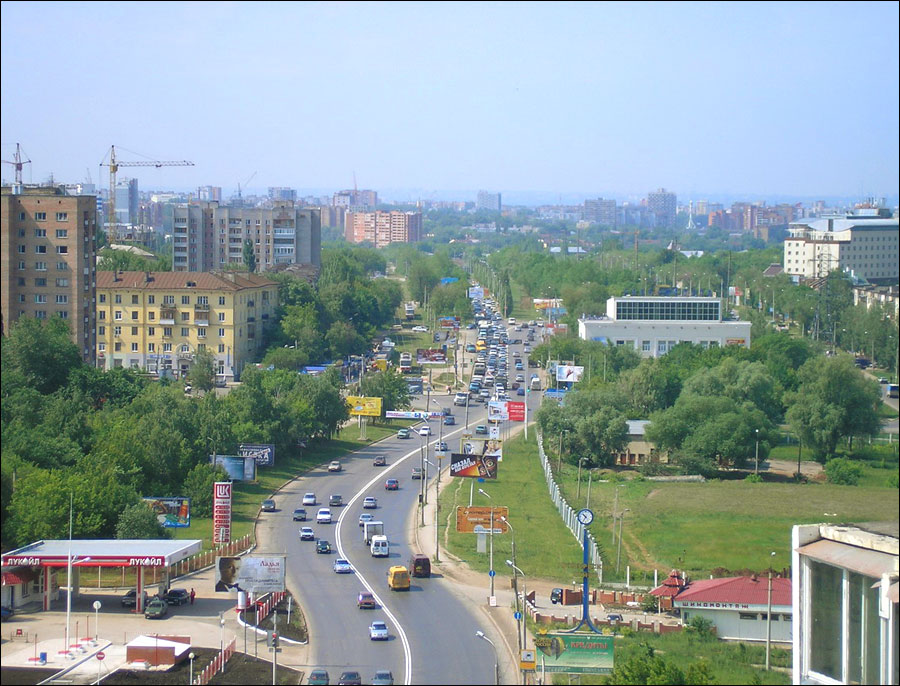
Samara cityscape
Author: Dyomin Ivan
Samara - Features
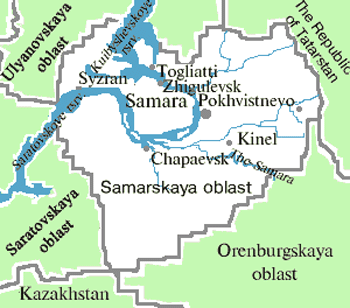
Samara is located on the left bank of the Volga River (Saratov Reservoir) opposite the Samara bend, at the confluence of the Samara (hence the city’s name) and Sok rivers. The City Day of Samara is celebrated on the second weekend of September.
The climate is moderately continental. Summers are hot and rather humid. Winters are moderately frosty, snowy and long. The average temperature in July is plus 23.5 degrees Celsius, in January - minus 9.9 degrees Celsius.
Samara is a major center for mechanical engineering and metalworking, food, as well as space and aviation industries. It is one of the main scientific centers of Russia in the space and aviation fields.
The city is one of the largest transport hubs in Russia, through which the shortest routes from Central and Western Europe to Siberia, Central Asia, and Kazakhstan run. The Kurumoch International Airport located 42 km from Samara offers regular flights to Volgograd, Yekaterinburg, Kazan, Krasnodar, Moscow, Nizhnevartovsk, Nizhny Novgorod, Novosibirsk, Novy Urengoy, Omsk, Perm, St. Petersburg, Sochi, Surgut, Ufa, Dubai, Istanbul, and other cities.
From the pier of the Samara river station, you can go on boat trips along the Volga, cruises to cities located along the river - Nizhny Novgorod, Kazan, Volgograd, Tolyatti. Passenger transportation in the city is carried out by buses, minibuses, trams, trolleybuses, and the subway.
The architectural heritage of Samara that has survived to this day is one of the richest in Russia. During a walking tour of the historical center of Samara, you can see buildings of the 19th - early 20th centuries preserving the atmosphere of an old merchant city. Samara has one of the longest river embankments in Russia (about 5 km) and the tallest railway station building in Europe (101 meters) with an observation deck (Komsomolskaya Square, 1).
In Samara, the most popular urban legends are associated with underground objects and tunnels through which you can allegedly go under the Volga River and get out on its other bank or on the islands. Rumors about the presence of a network of underground communications are caused by the presence of a large cave within the city limits (The Brothers Greve Cave), as well as a large number of underground structures, such as Stalin’s Bunker, Beria’s Bunker, and the former Army Headquarters bunker.
Main Attractions of Samara
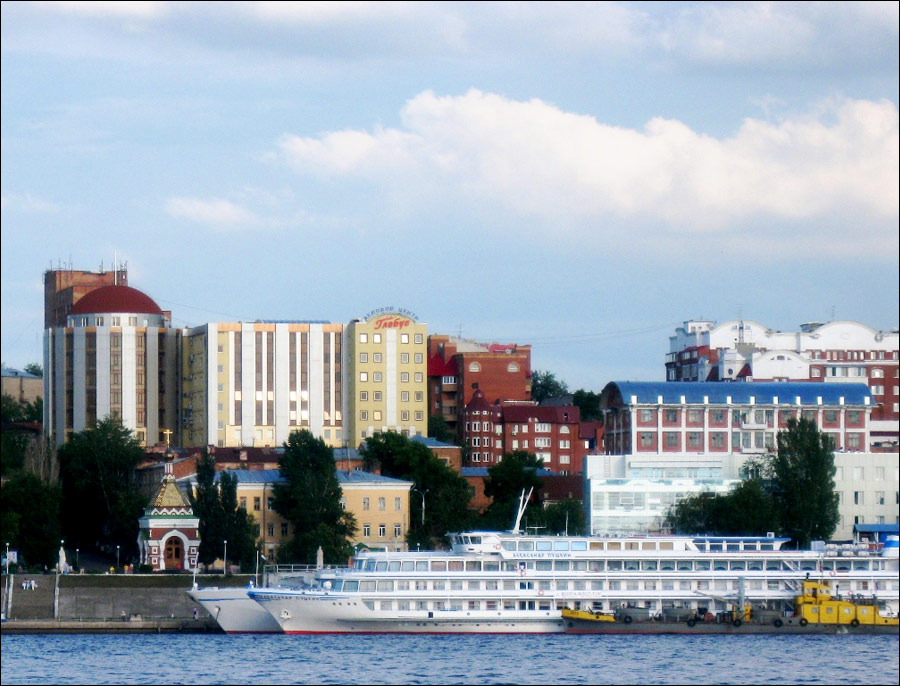
Samara Embankment - one of the most beautiful places in Samara and one of the best embankments in Russia. It stretches along the bank of the Volga for more than 4 km and descends to the river in terraces. A lot of tourists, having arrived in the city, immediately go to the embankment to see the Volga. Residents of Samara also love to come here, breathe clean air and enjoy the picturesque panorama of the great Russian river.
From the nearby pier, ships go on river cruises along the Volga. A river trip is a great opportunity to admire Samara and a good alternative to a bus tour of the city on a hot summer day. City holidays are often held on the embankment.
The embankment of Samara harmoniously combines the advantages of the beach and promenade with places for active recreation and sports. There are cafes and restaurants, benches and fountains, boat and bicycle rentals, paths for cyclists and roller skaters.
There are a lot of interesting art objects on this embankment including a monument to a heating radiator, the sculptural composition “The Barge Haulers on the Volga” and a sculpture of Comrade Sukhov from the famous Soviet movie “White Sun of the Desert”, who was a native of a village near Samara.
Zhigulevskoye Brewery - one of the most visited sights of Samara, which is the birthplace of the famous throughout Russia “Zhigulevskoye” beer. Here you can not only taste original beers, but also go on an excursion and observe the production process.
This brewery located on the bank of the Volga River is one of the oldest in Russia. It was built by the hereditary Austrian brewer Alfred von Vacano in 1881. The building of the brewery is a monument of architecture and an object of cultural heritage of Russia. Volzhskiy Avenue, 4.
Iversky Convent (1860) - a beautiful architectural complex located in the immediate vicinity of Zhigulevskoye Brewery. There are several churches here. You can walk around the territory of the monastery. Volzhskiy Avenue, 1.
Samara Space Museum - one of the youngest museums in the city opened in 2007. It immediately became one of the symbols of Samara. Here you can see a real Soyuz launch vehicle organically integrated into the facade of the museum building. This architectural project has become one of the most original and interesting in Samara.
Actually, the museum is a pedestal on which the rocket stands. Together with the spacecraft, its height reaches 68 m. The exposition is divided into two parts. The first includes space instruments and spacecraft models. The second part is devoted not so much to technology as to people in space, their way of life and everyday activities. Lenin Avenue, 21.
Stalin’s Bunker - one of the alternative locations of the headquarters of the Supreme Commander-in-Chief of the Armed Forces of the USSR I.V. Stalin, built in Samara at a depth of 37 meters in 1942. Until 1990, it was a classified object. Today, a museum dedicated to the Second World War is open in the bunker.
The object is located under the building of the Academy of Culture and Art, which previously housed the Kuibyshev Regional Committee of the Communist Party of the Soviet Union. For the construction of the bunker, the design of the metro station “Aeroport” in Moscow was copied. Frunze Street, 167.
Monuments in Samara
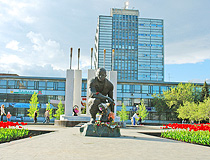
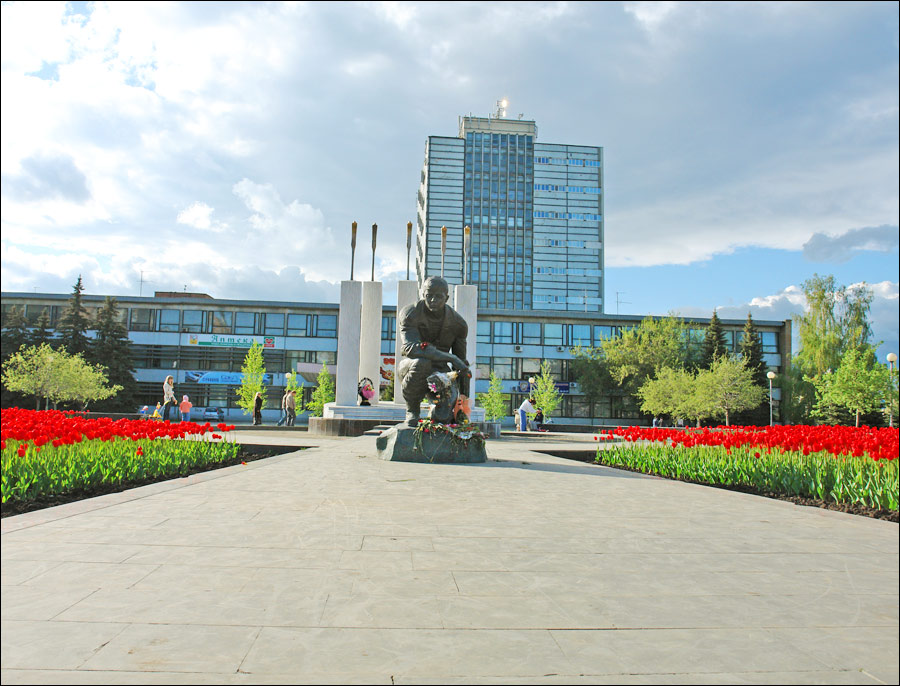
Monument to Soldiers-Internationalists in Samara
Author: Alexandr Strogino
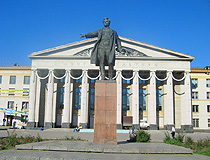
Monument to Sergei Kirov in Samara
Author: Razorenov Roman
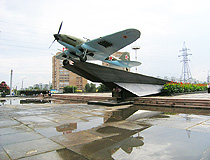
Monument to Il-2 attack aircraft in Samara
Author: Nikolay Komarkov
Samara Regional Art Museum. The core of the museum collection is made up of paintings by local artists created at the turn of the 20th century and works by Russian artists of the early 20th century. Today, this museum also has such exhibits as paintings, graphics, works of the Russian avant-garde and Soviet art of the 1920-1970s, paintings by European painters.
In total, the collection has over 35 thousand paintings displayed in five permanent exhibitions. The museum is located in the very center of Samara and occupies one of the most beautiful buildings in the city. Kuybysheva Street, 92.
Samara Children’s Art Gallery. This museum occupies a very picturesque merchant’s mansion that once belonged to Ivan Klodt, an architectural monument of federal significance of the 19th century. Art works created by children, students and graduates of art schools are exhibited here. The gallery also has a museum of everyday life and culture of the late 19th - early 20th centuries and a museum of arts and crafts. Kuybysheva Street, 139.
Mansion of Alexandra Kurlina (Museum of Modernism). This Art Nouveau house built in 1903 and standing at the intersection of Krasnoarmeyskaya and Frunze Streets is one of the most interesting architectural monuments of Samara. In 2013, a permanent exhibition in three rooms on the ground floor was opened: “study”, “boudoir”, and “dining room”. The exposition presents furniture, clothing, paintings, accessories of European and Russian masters of the early 20th century. In total, the house has 22 rooms, each of which is unique in its own way. Frunze Street, 159.
Roman Catholic Church of the Sacred Heart of Jesus (1902-1906). This neo-Gothic building, unusual for this part of Russia, was built at the expense of the Catholic community of Samara, which consisted mainly of Poles. In 1991, the church was returned to the Catholic community. It was restored and re-consecrated. Today, it also hosts concerts of sacred and classical music. Frunze Street, 157.
House with Elephants (1908-1909) - the former summer residence of the Samara merchant and traveler Konstantin Golovkin, built in the Art Nouveau style on the bank of the Volga, an architectural monument and an object of cultural heritage of Russia. Two full-size sculptures of elephants installed in front of the facade overlooking the Volga gave this building its name. Sovetskoy Armii Street, 292.
Stele “Ladya” (1986) - a monumental white sculptural composition 20 meters high erected to the 400th anniversary of Samara. The monument depicts a stylized old sailing boat floating on the waves. In the middle of the “sail” there is a bas-relief depicting the coat of arms of Samara. This is a popular place for wedding photo sessions, meetings, festivities, and other events. Sofiyskaya Embankment (Lesnaya Street, 23).
Glory Monument (1971). This majestic monument is dedicated to the workers of the Kuybyshev aviation industry, who made a huge contribution to the victory of the USSR in the Second World War. It is a 13-meter figure of a worker standing on a 40-meter pedestal facing the Volga. The worker is holding a stylized aircraft in his raised arms. Sometimes this monument is mistaken for a monument to Yuri Gagarin. Slavy Square.
Leningradskaya Street - a tourist alley in the historic center of Samara with a length of 1.7 km. One of its parts between Galaktionovskaya and Kuybysheva streets is pedestrian. Here you can find mansions of the 19th-20th centuries, shops, boutiques, hotels, etc.
Observation Deck “Vertoletka” (“Helicopter”). From here, stunning panoramic views of Samara, the Volga River, Zhigulevskie mountains, and the Samara bend open up. The territory is landscaped, there is a restaurant and a summer cafe. Vetvistaya Street, 1.
“The Motor World of Vyacheslav Sheyanov” - a unique museum in Russia, where you can immerse yourself in the living history of the Golden Age of motorcycles (1930-1945). Located near Samara, it has a unique collection of restored motorcycles with an engine capacity of over 750 cubic centimeters produced in Austria, Belgium, Great Britain, Germany, Denmark, Italy, Poland, USSR, USA, France, Czech Republic, Switzerland, Sweden, Japan. In total, there are more than 100 exhibits here. Samara Oblast, Petra Dubrava, Klimova Street, 2b.










The comments of our visitors