History of Udmurtia
According to archaeological sites, the first people began to settle on the territory of present Udmurtia in the Mesolithic Age (7-10 thousand years ago). In the subsequent archaeological epochs, in the western Urals, the processes of differentiation of the ancient Finno-Ugric population took place. Later, about one thousand years ago, the Udmurt ethnos formed.
In the 10th century, significant impact on the ancient Udmurts was their inclusion in the Volga Bulgaria state. Since the 13th century, the southern Udmurts were under the influence of the Golden Horde, and then - the Kazan Khanate. The largest handicraft, cult and administrative center of the northern Udmurts, who remained independent during the Middle Ages, was Idnakar.
In the 12th-13th centuries, the first Russian settlements appeared on the Vyatka River. By the 15th century, the northern Udmurts were included in the Grand Duchy of Moscow. In 1552, after Moscow conquered the Kazan Khanate, the northern and southern Udmurts found themselves within the borders of one state.
More Historical Facts…
In the 17th-18th centuries, the development of this territory began, the first enterprises were built, metallurgy and production of weapons were the most developed industries. Since 1731, the mass conversion of the Udmurts to Christianity began.
Until the middle of the 18th century, the population of Udmurtia was engaged mainly in agriculture and crafts. In the late 1750s and early 1760s, the largest industrial enterprises - Izhevsk and Votkinsk plants were built. In 1774-1775, the Udmurts took part in the peasant war led by Emelian Pugachev.
In the second half of the 19th century, there was a rapid development of industrial production, new factories, schools, gymnasiums were opened. In 1889, in the south of the territory of present Udmurtia, the first railways were built. The railways played an important role in the economic development of the region. In the 18th - early 20th centuries, the Udmurt lands were part of the Vyatka province.
On November 4, 1920, Votskaya Autonomous Oblast was formed. In 1921, Izhevsk became the capital city of the region. On January 1, 1932, it was renamed into Udmurt Autonomous Oblast. On December 28, 1934, it became the Udmurt Autonomous Soviet Socialist Republic. During the Second World War, dozens of industrial enterprises from Kiev, Kharkov, Baku, Odessa, Podolsk and other cities were evacuated to Udmurtia.
On November 4, 1990, the Supreme Soviet of the Udmurt ASSR proclaimed the sovereignty of the republic, the region received a new name - the Udmurt Republic or simply Udmurtia. The collapse of the USSR caused a deep crisis in the economy of Udmurtia, which especially struck the engineering industry focused on military production.
Today, the status of the national republic and the defense orientation of the region’s industry largely determine the socio-economic and cultural identity of the Republic of Udmurtia.
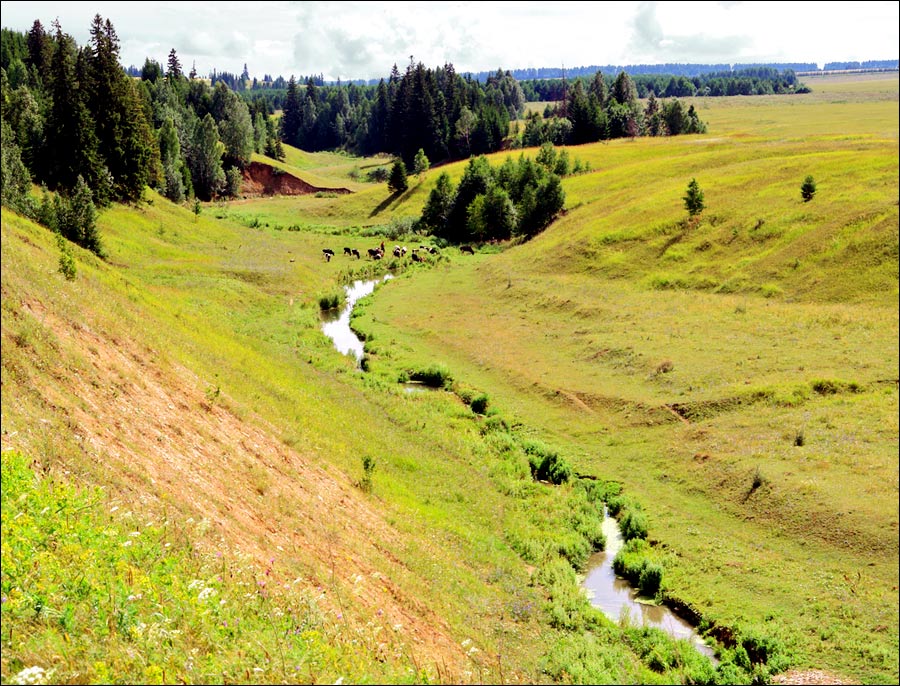
Beautiful nature of Udmurtia
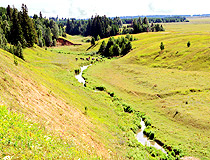
Hilly landscape of Udmurtia
Author: Iliya Chirkov
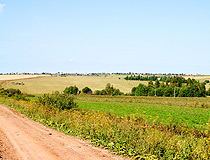
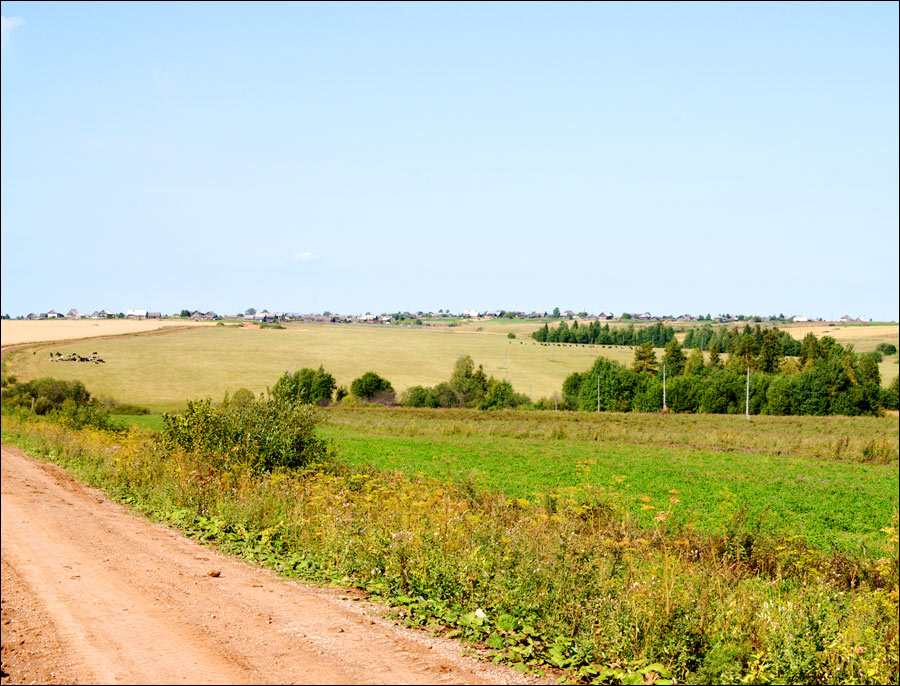
Udmurtia scenery
Author: Victor Sergeev
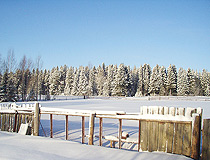
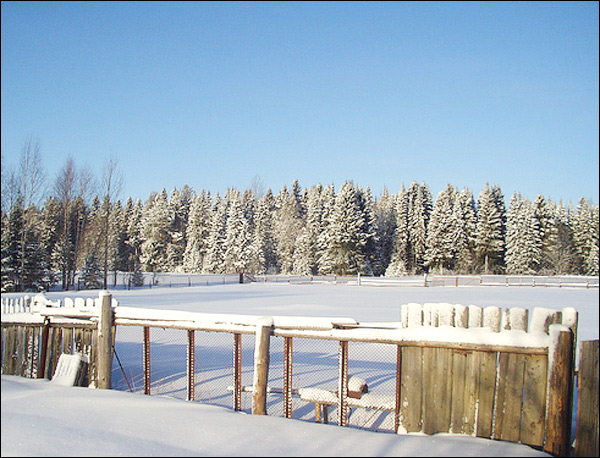
Winter in Udmurtia
Author: Aivar Ruukel
Udmurtia - Features
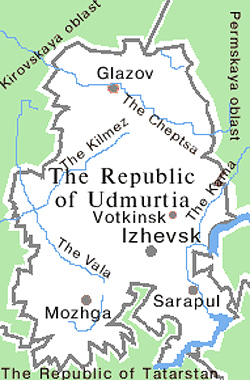
Udmurtia is located in the east of the East European Plain, on the territory adjacent to the western slope of the Urals. The length of the territory from north to south is about 297 km, from west to east - 200 km.
The climate is moderately continental with cold snowy winters and warm summers. The average temperature in July is about plus 18 degrees Celsius, in January - minus 14 degrees Celsius.
The Udmurts are the indigenous population of the region. It is one of the ancient East-Finnish peoples of the northwestern forest area of the Urals. The total number of the Udmurts in the world is about 750 thousand people. About 65% of them live in the Udmurt Republic. The state languages of the republic are Russian and Udmurt.
The national composition of Udmurtia according to the 2010 census: Russians (62.2%), Udmurts (28%), Tatars (6.7%). The largest cities and towns of Udmurtia are Izhevsk (645,200), Votkinsk (96,100), Sarapul (93,400), Glazov (91,200), Mozhga (48,200).
The main mineral resource of Udmurtia is oil. The explored industrial oil reserves are about 300 million tons, with an annual production of 10 million tons. Today, all major deposits have been developed for decades and are in the stage of falling production. The republic also produces coal and peat.
Udmurtia also has industrial reserves of limestone, dolomite, building sand, crushed stone, clay for production of bricks, building stone, sand-gravel mixture. About 46% of the territory is covered with forests, half of which are coniferous.
The largest rivers of Udmurtia - the Kama and the Vyatka - have origins in the north of the republic. From the south-east and south, Udmurtia is washed by the Votkinsk and Nizhnekamsk reservoirs, formed on the Kama River as a result of the construction of dams of hydroelectric power stations.
Udmurtia - Economy
The Udmurt Republic is a region with developed industry and diversified agricultural production. It has the highest concentration of defense enterprises in Russia. The main industries are machine building, metalworking, ferrous metallurgy, and woodworking.
Cars and vans, paper machines, motorcycles, equipment for oil fields, hunting and sporting guns, chemical equipment are produced in the region. Izhmash (formerly Izhevsk Arms Factory) is Russia’s largest producer of small arms, created by the decree of Emperor Alexander I in 1807. Logging is conducted in the northern and western parts of the republic.
Agricultural lands occupy about 50% of the territory of the republic. Rye, wheat, buckwheat, barley, oats, millet, peas, corn, sunflower, flax, rape, potatoes, vegetables, forage crops are grown.
The only airport of the republic is located in Izhevsk. Several federal highways pass through the territory of Udmurtia: M7 (access to Izhevsk and Perm), P320, P321, P322. The leading role in interregional relations of the Udmurt Republic is played by rail transport carrying out the bulk of interregional transport of goods and passengers.
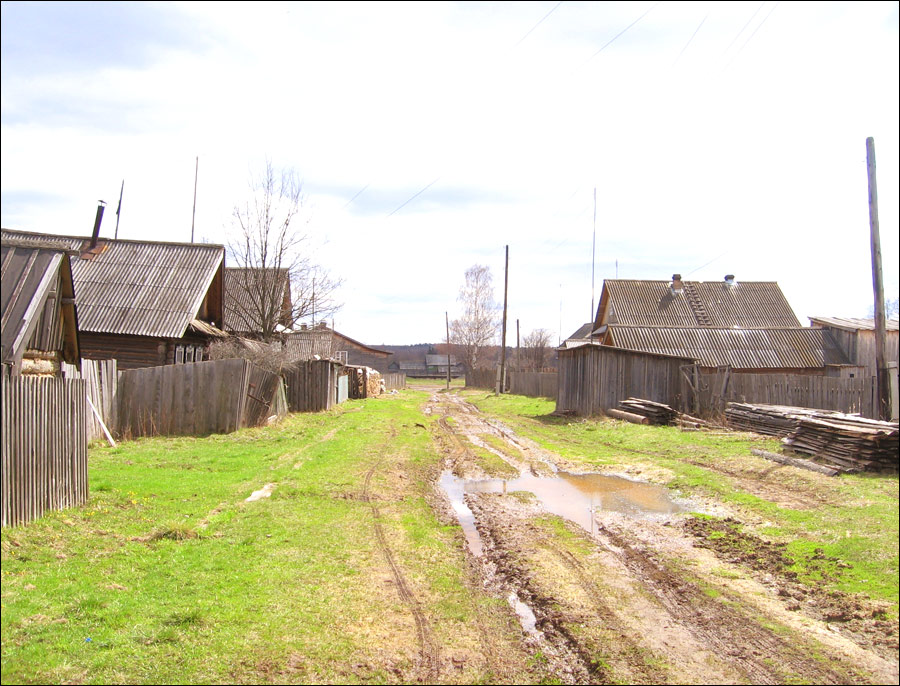
Pictures of the Udmurt Republic
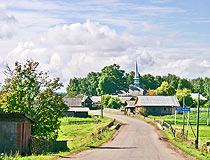
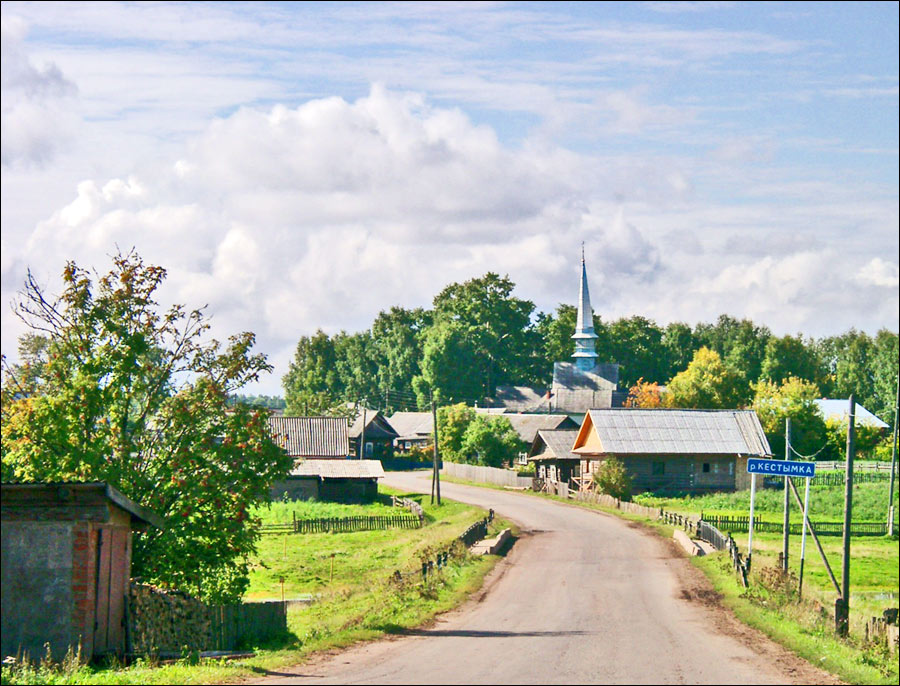
Village in the Udmurt Republic
Author: Nadezda Shklyaeva
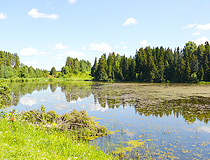
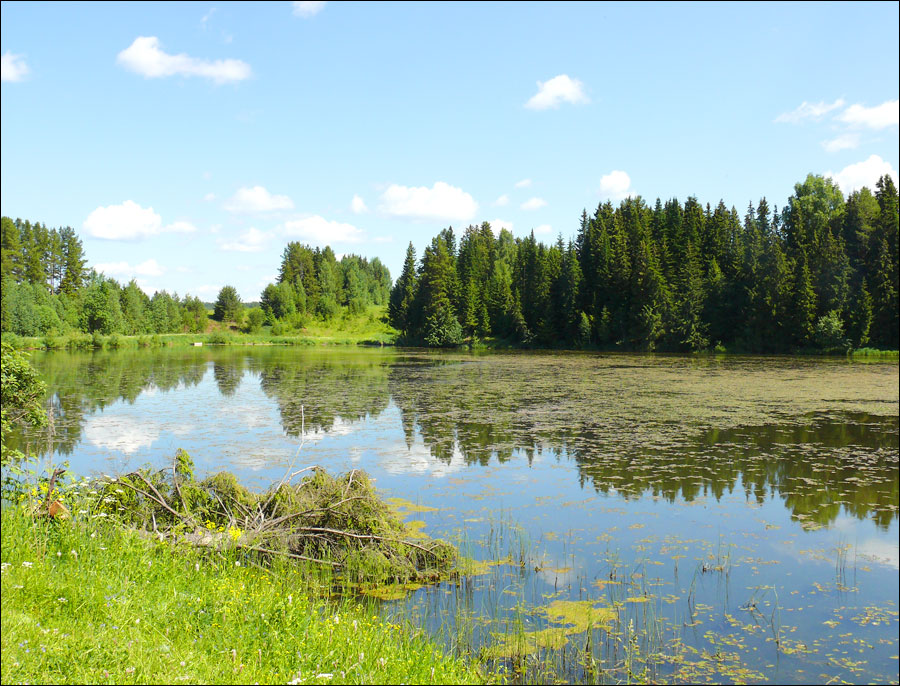
Pond in Udmurtia
Author: Andreev Sergey
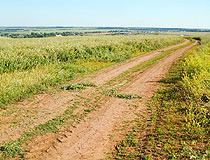
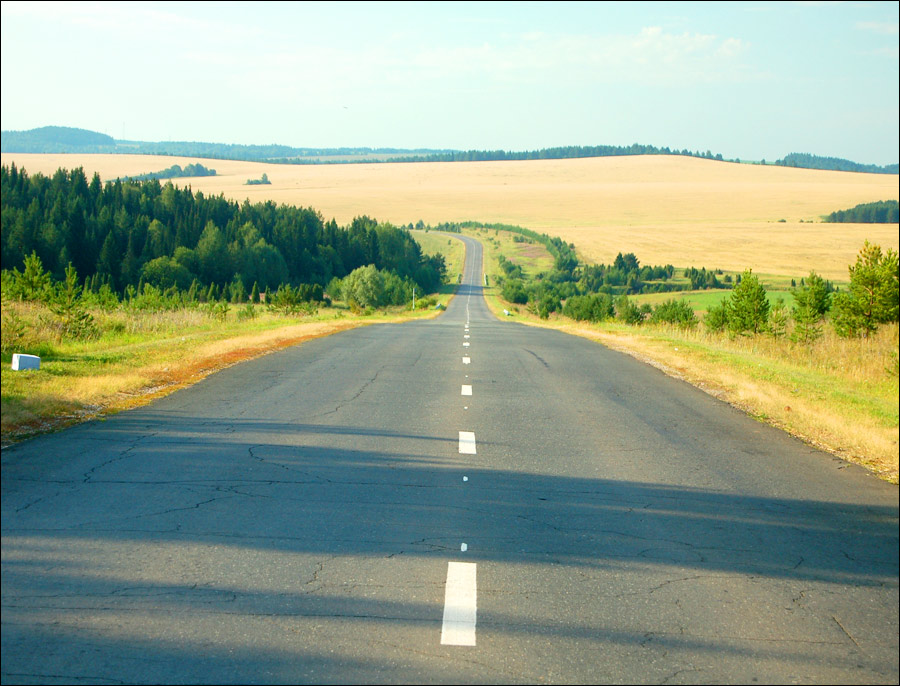
Field road in Udmurtia
Author: Joonas Tuuling
Tourism in Udmurtia
Tourist complex of Udmurtia includes about 2.5 thousand objects. Many of them are related to the life and work of such world-famous people as Peter Ilyich Tchaikovsky, Mikhail Timofeevich Kalashnikov, Galina Alekseevna Kulakova, Nadezhda Andreevna Durova.
There are more than 150 accommodation places for tourists, 32 museums, over 2 thousand historical and cultural monuments, natural parks, reserves and monuments, sports complexes. Rural tourism is also developing. The reception of tourists in rural areas is organized by about 150 private households.
The main souvenirs of Udmurtia are handicrafts: woven bags, tapestries, felt products, folk toys, carved wooden souvenirs, boxes, birch bark, trinkets made from Ural gems.
The main sights of Udmurtia:
- Museum-Exhibition Complex named after Kalashnikov in the central square of Izhevsk,
- Architectural and Ethnographic Museum-Reserve “Ludorvai” located not far from Izhevsk, examples of old Russian and Udmurt buildings,
- House-Estate of Tchaikovsky in Votkinsk,
- Sarapul - a town where you can feel the atmosphere of pre-revolutionary Russia; the pearl of Sarapul is the villa of the merchant Bashenin;
- Source of the Kama River in the village of Kuliga in Debessky district,
- Old Believers villages in the north of the Udmurt Republic and the Siberian tract museum (Igrinsky district), a place where you can feel like a convict of the Russian Empire times,
- Cedar Grove in Zayakino - a nature monument of regional importance,
- Zuevy Springs - the southernmost point of Udmurtia where the Kama spreads almost to the horizon, pilgrims from all over Russia come here to visit the Holy and Gremyachiy springs with healing water,
- Mount Baigurez - a hill on the bank of the Cheptsa River, one of the most beautiful places in Udmurtia with a magnificent view of the surroundings,
- Baba Yaga Residence in the village of Kotlovka in Grahovsky district, on the bank of the Yaga River. Baba Yaga is a character (a forest witch) of Russian folk tales,
- Holy Assumption Convent in the village of Perevoznoye in Votkinskiy district.
There are several sanatoriums and curing resorts in Udmurtia, the largest of them are “Varzi-Yatchi”, “Metallurg” (located in Izhevsk) and “Uva”. In 2000s, new recreation centers came into being - the mountain skiing centers of “Chekeril” and “Nechkino”.
Natural parks of the Udmurt Republic:
- National Park “Nechkinsky” on the coast of the Kama River,
- Natural Park “Sharkan” (Sharkansky district),
- Natural Park “Ust-Belsk” (Karakulinsky district),
- State Natural Reserve “Kokmansky”,
- State Natural Botanical Reserve “Andreevsky Pine Forest”.











The comments of our visitors