
31
Retrofuturistic Postcards “Moscow 200 Years From Now” (1914)
No comments · Posted by Sergei Rzhevsky in History, Society, Technology
This series of eight futuristic postcards from 1914 was created by an unknown artist for the Moscow confectionery factory “Einem.” The illustrations on the cards depict what the artist envisioned Moscow to look like in the 22nd and 23rd centuries. The postcards were included in a package of candies entitled “Moscow of the Future” and were distributed as a supplement to the confectionery.
They depict such famous landmarks as Red Square, Teatralnaya Square, Lubyanka Square, and Petrovsky Park. Notably, one of the cards featured an image of Moscow’s Central Station, which was proposed for construction in the early 20th century but subsequently lost its relevance.
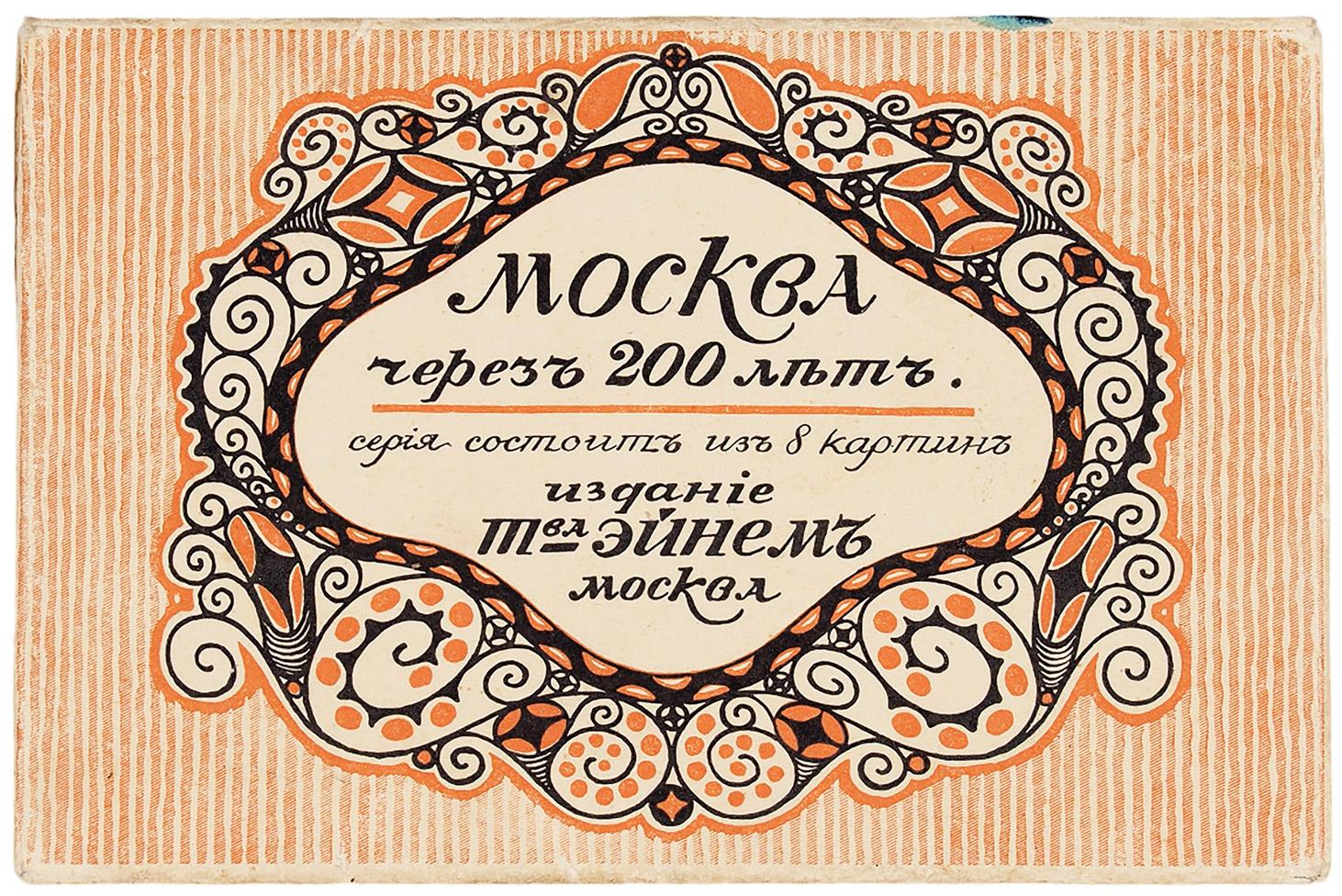
On the back of each card there was a brief annotation of the drawing; on card No. 1 – of the entire series:
“Looking back with regret on a glorious past is not only difficult but downright unpleasant. No matter how wonderful the past, once it’s gone, there’s no point in talking about it.
While leaving the description and study of bygone times to wise historians, we, the compilers of this brief album, intended to peer, to the best of our ability and the richness of our colorful Imagination, into the more or less distant future of our beloved and familiar Mother Moscow.
Anyone who knows and loves Moscow will find it intriguing to imagine what Moscow and its inhabitants will be like in approximately 200-300 years. These are the pictures that open up to our gaze based on more or less precise logical conclusions.”
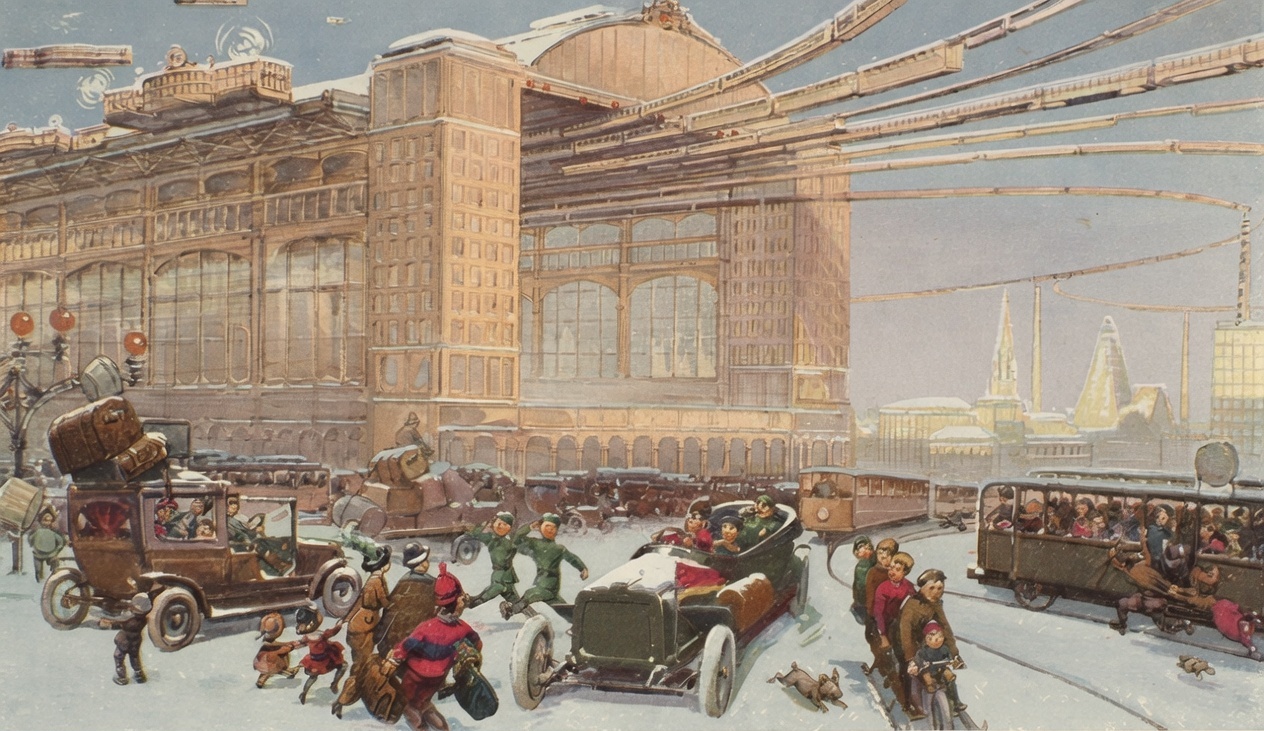
Central Station.
“Winter is the same as it was 200 years ago. The snow is just as white and cold. Central Station for Land and Air Transport. Tens of thousands of people arriving and departing, everything moves extremely quickly, smoothly, and conveniently. Passengers can travel by land or air. Those who wish can travel as fast as telegrams.”
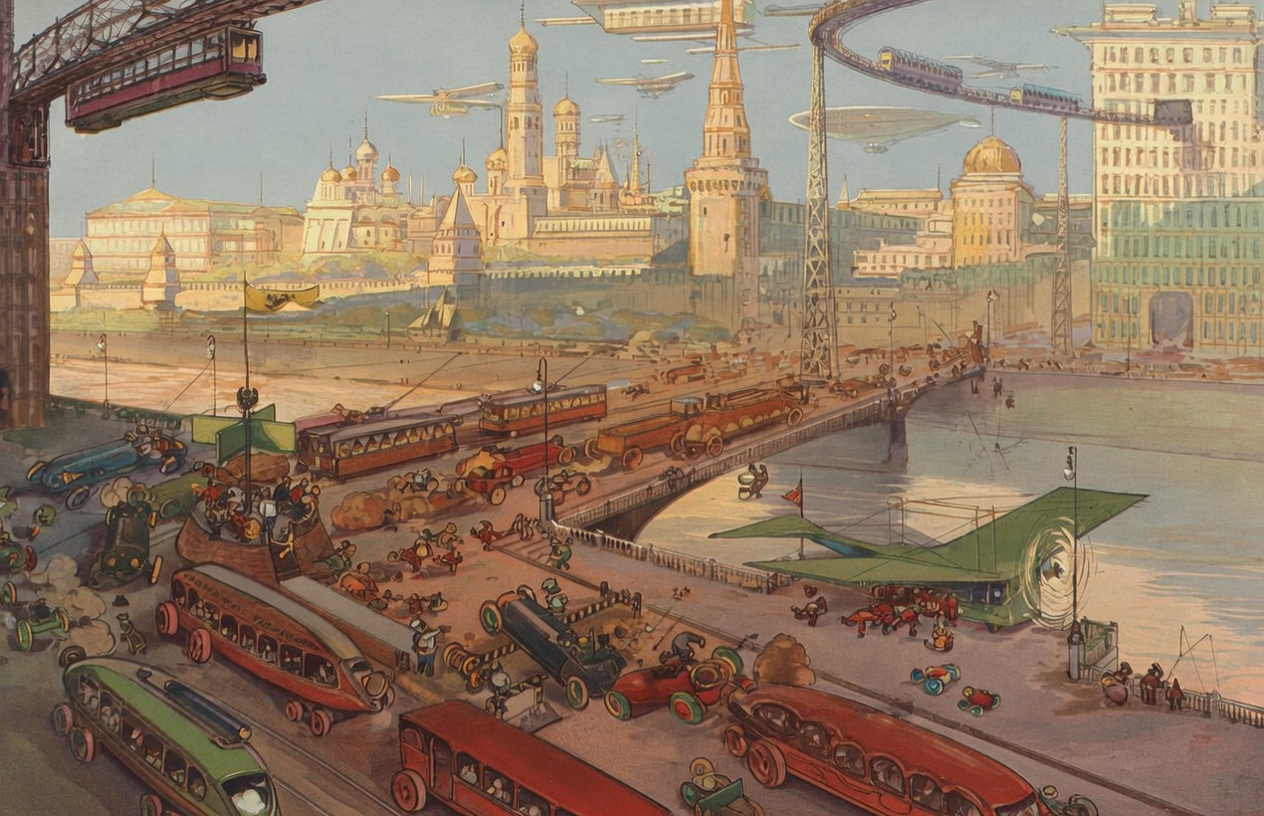
Moskvoretsky Bridge.
“The Kremlin still adorns the ancient white-stone city, and with its golden domes, it presents a magical sight. Right next to the Moskvoretsky Bridge, we see huge new buildings housing commercial enterprises, trusts, societies, syndicates, and so on. The carriages of the aerial tramway glide gracefully against the sky.”
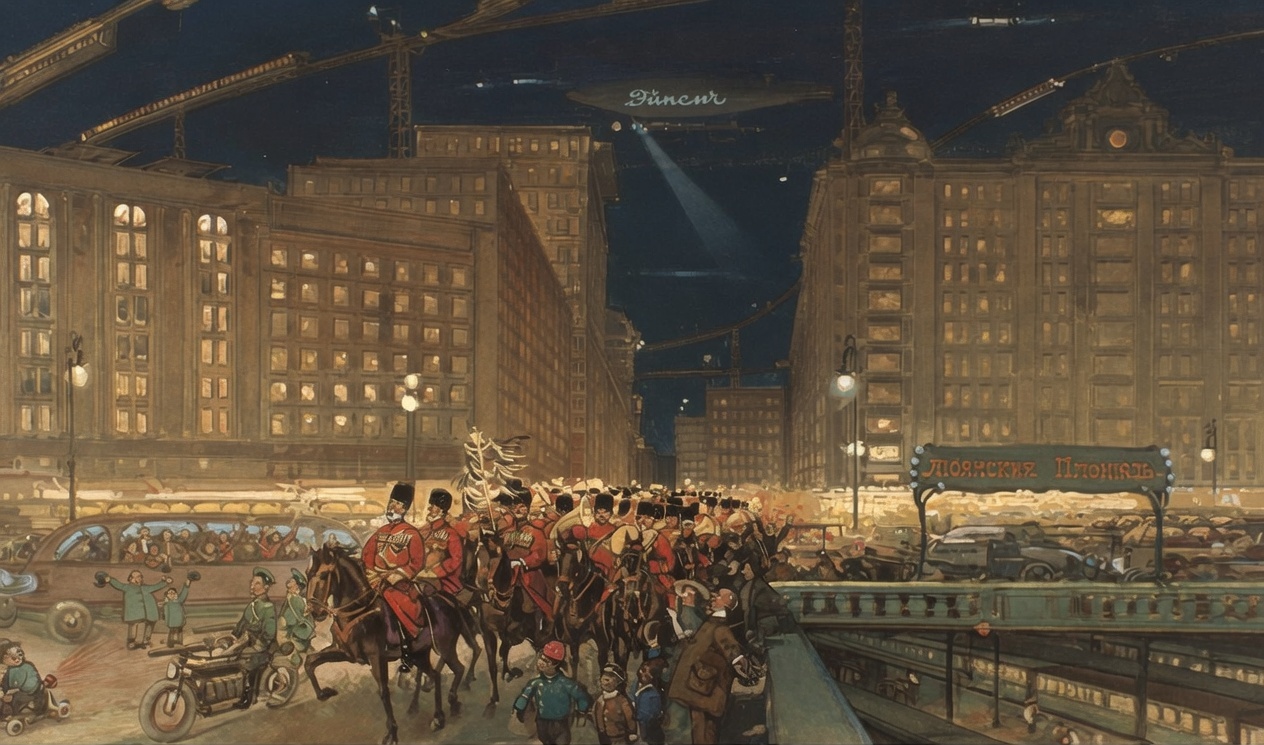
Lubyanka Square.
“A clear evening. Lubyanka Square. The blue sky is marked by the crisp lines of illuminated airplanes, airships, and airship carriages. Long carriages of the Moscow Metro, which was only a topic of conversation in our time in 1914, emerge from beneath the square’s pavement. Across the bridge over the Metro, we see a well-ordered detachment of valiant Russian troops, still in their uniforms from our own time. In the blue air, we spot the freight airship Einem, flying to Tula with supplies of chocolate for retail stores.”
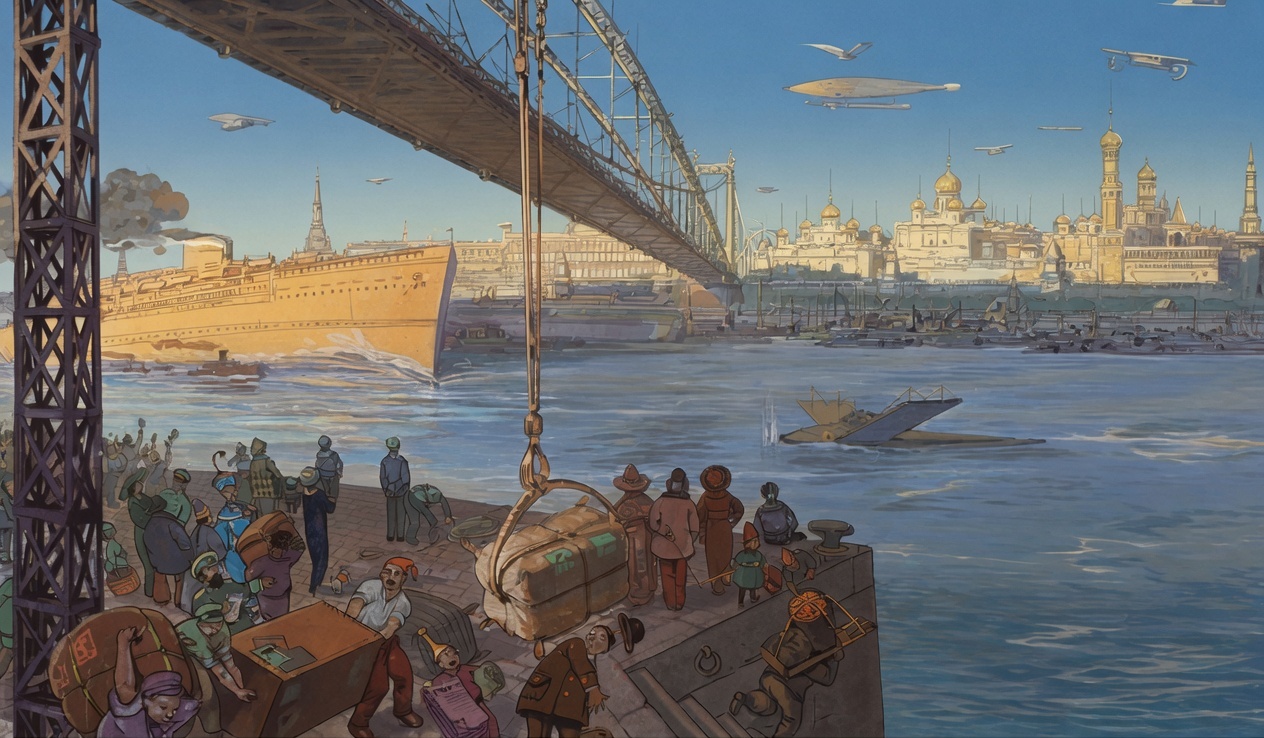
The Moscow River.
“The bustling, noisy banks of the vast, navigable Moscow River. Enormous transport and merchant cruisers and multi-story passenger ships race along the clear, deep waves of the huge commercial port. The world’s entire fleet is exclusively merchant. The navy was abolished after the peace treaty in The Hague. The bustling harbor displays the diverse costumes of all the nations of the globe, for the Moscow River has become a global trading port.”
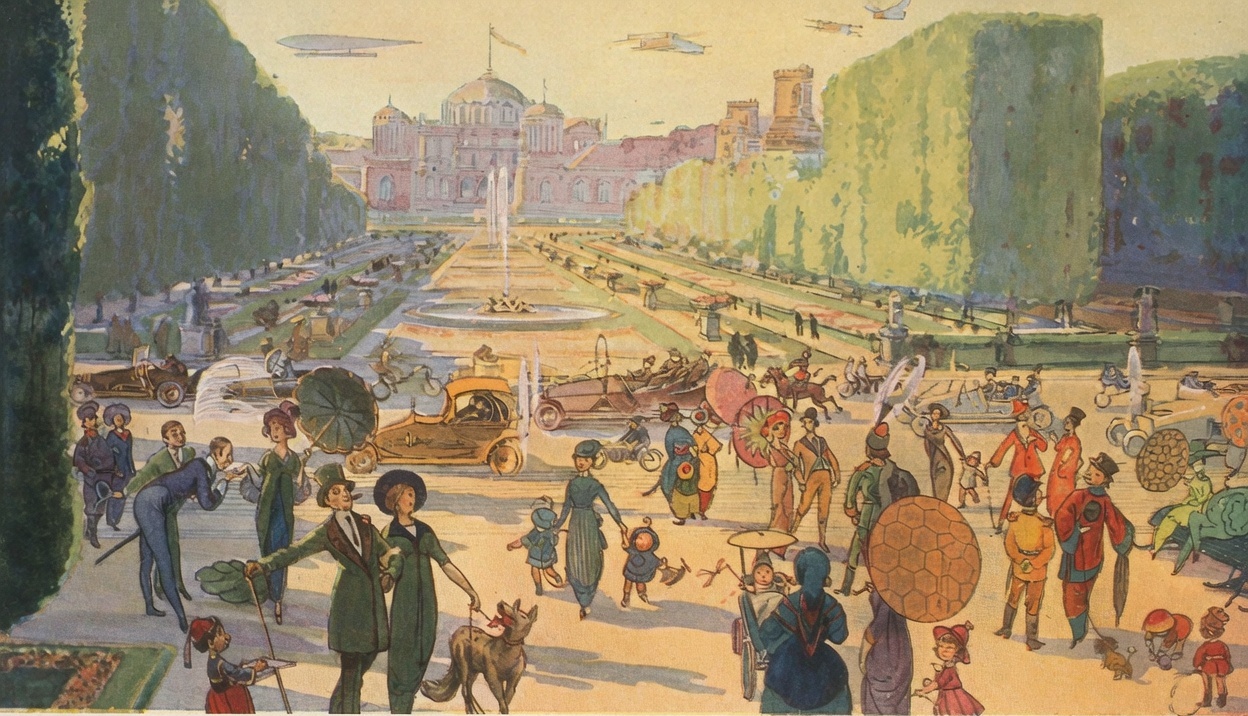
Petrovsky Park.
“We are transported back to Petrovsky Park. The alleys have been widened beyond recognition. The ancient Petrovsky Palace has been restored, and the Museum of the Peter the Great Era is housed within. Marvelous fountains gush and sparkle everywhere. Airships and airplanes cut through the perfectly clean air, free of germs and dust. Crowds of people in vibrant 23rd-century costumes enjoy the wondrous nature in the same place where we, our great-great-great-grandfathers, used to stroll.”
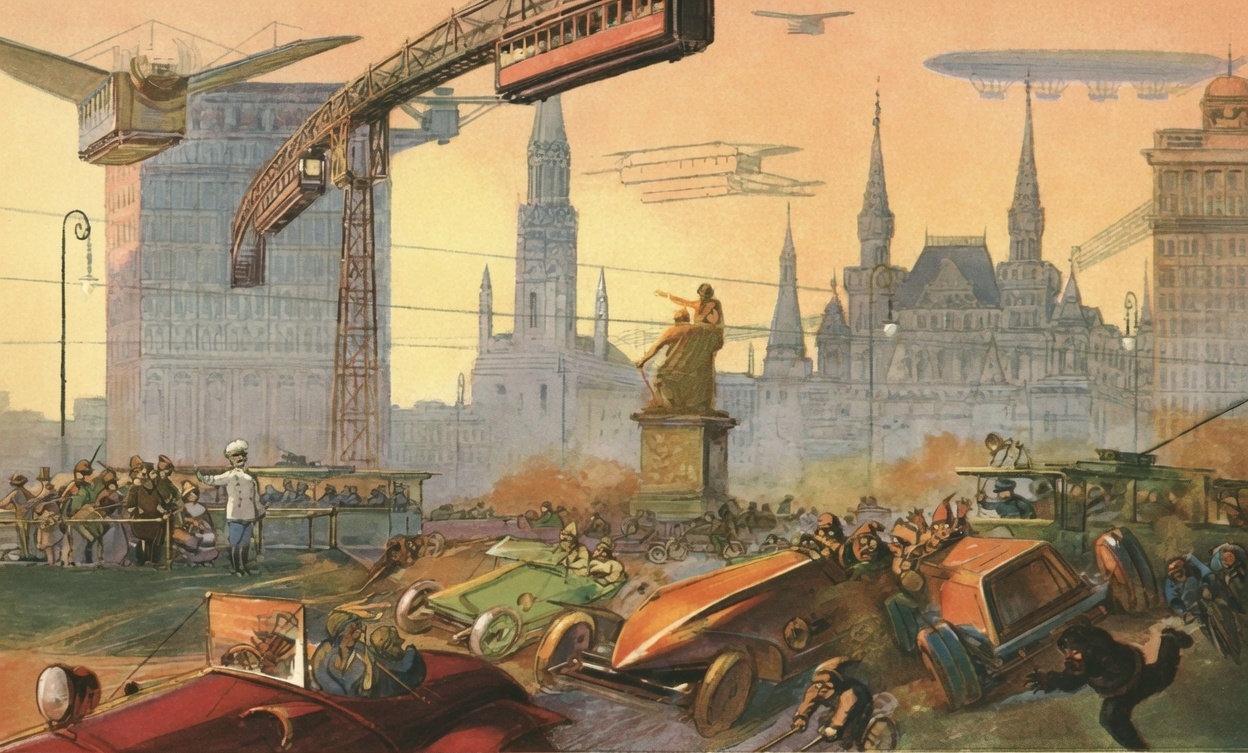
Red Square.
“The sound of wings, the jingle of trams, the honking of cyclists, the sirens of cars, the roar of engines, the shouts of the public. Minin and Pozharsky. The shadows of airships. In the center, a policeman with a sabre. Timid pedestrians seek refuge at the former execution site. This is how it will be in 200 years.”
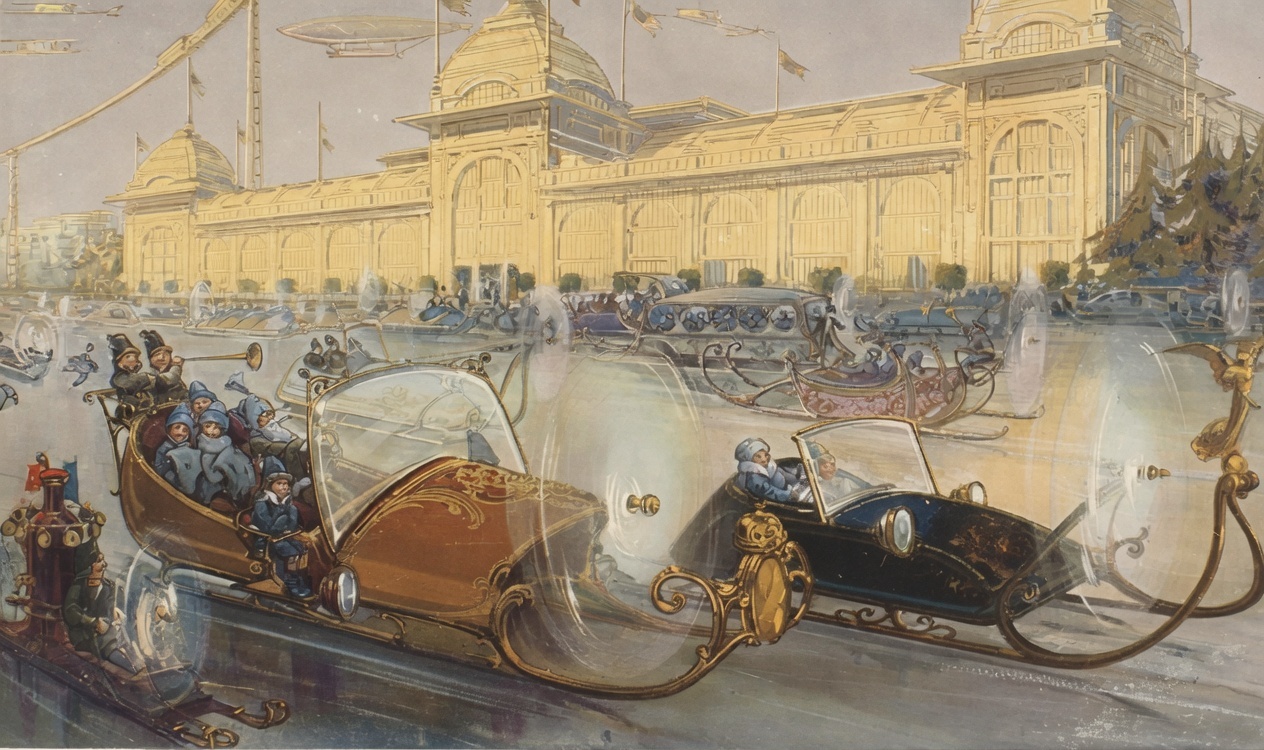
Petersburg Highway.
“A beautiful, clear winter in the year 2259. A corner of “old” merry Moscow, the ancient “Yar” still serves as a venue for Muscovites’ revelry, just as it did more than 300 years ago. For the convenience and enjoyment of travel, the entire Petersburg Highway has been transformed into a crystal-clear, icy mirror, across which graceful aerosleds glide. Traditional sbiten* sellers and hot air balloon vendors dart along on small aerosleds. Even in the 23rd century, Moscow remains true to its customs.”
*Sbiten is an ancient, traditional East Slavic hot or cold drink made from honey, water, and spices. The name comes from the verb “sbit'” (to combine). Before the arrival of tea in Rus’, it was the main warming drink.
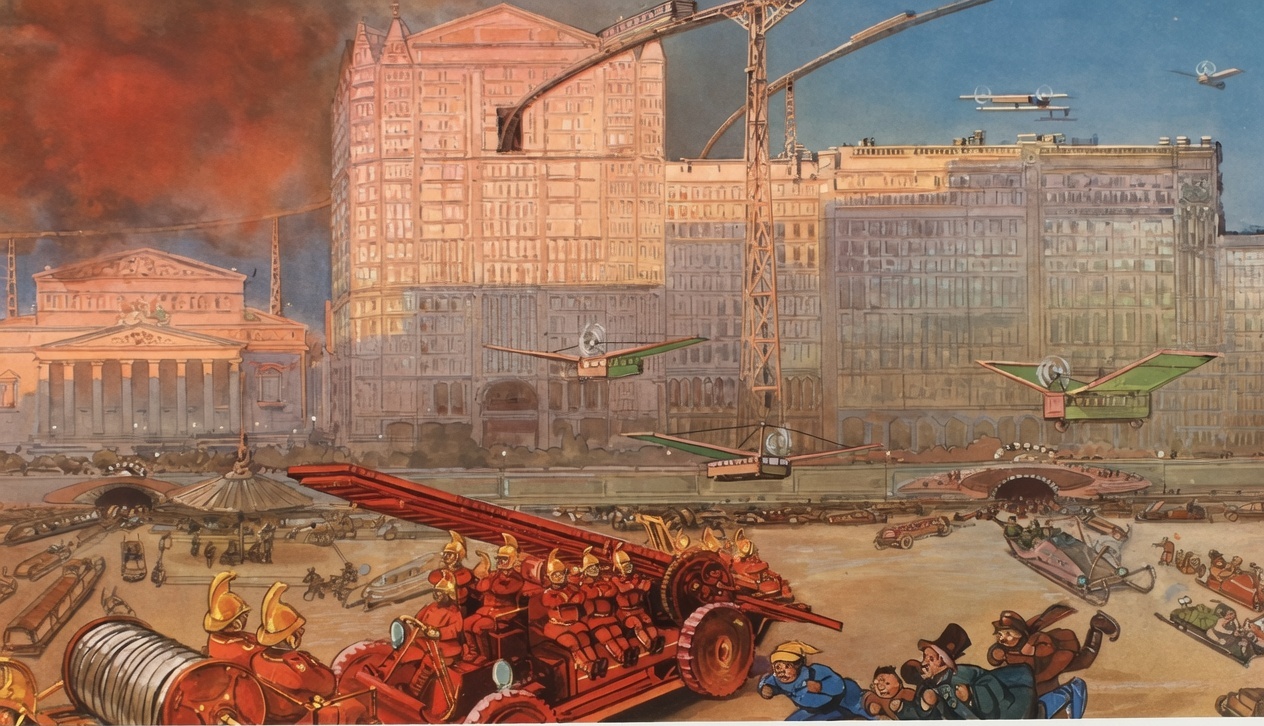
Theater Square.
“The pace of life has increased a hundredfold. Everywhere, there’s the lightning-fast movement of wheeled, winged, propeller-driven, and other vehicles. The Muir and Merliz Trading House, which existed as far back as 1846, has now grown to incredible proportions, with its main departments connected to overhead railways. Numerous engines fly up from under the pavement. Somewhere in the distance, a fire is raging. We see a fire brigade truck, which will soon put an end to the disaster. Meanwhile, biplanes, monoplanes, and numerous flying boats are rushing to the fire.”

Tags: Moscow city · Russian Empire
You might also like:
 Urban and Rural Buildings in the Russian Empire in 1881
 Russian Beauties in the Paintings of Konstantin Makovsky
 People of the Russian Empire in the 1850s-1870s
 The Motives of Russian Architecture in 1873-1880
 The Last Years of the Russian Empire in Unique Photographs
 The Movie Posters in Russia in 1914-1918
<< Visual Revolution: Soviet Movie Posters from the 1920s