History of Perm
Foundation of Perm
The territory of Perm has been inhabited by people since ancient times. More than 130 archaeological sites, from the Stone Age to the late Middle Ages, have been studied here. About 17 thousand years ago, there was a Paleolithic site in the center of today’s Perm. During the excavations, several thousand different stone tools were found. The inhabitants of the site were hunting reindeer and horses.
In the 17th century, these lands belonged to the Stroganovs family, famous Russian merchants. The first written mentions of a settlement on the territory of the historical center of Perm (the village of Yegoshikha) date back to 1647.
In 1720, by order of Emperor Peter I, Vasily Tatishchev, the managing director of the Ural state-owned factories, a famous Russian historian and geographer, went to Siberia Governorate to build factories for smelting copper and silver. He chose a place near the village of Yegoshikha for the construction of a copper smelter because of the presence of copper ore and a river for the transportation of goods.
In 1723, the construction of the Yegoshikhinsky copper-smelting plant began, which became the moment when Perm was founded. In 1736, the Motovilikhinsky copper-smelting plant was founded about 4 km from the Yegoshikhinsky plant upstream of the Kama River.
More Historical Facts…
In 1759, the village near the Yegoshikhinsky plant was destroyed by fire, only the church and several houses around it survived. In 1764, instead of the wooden church, a stone one was built - the Peter and Paul Cathedral - the first stone (brick) building in Perm. This building has survived to this day.
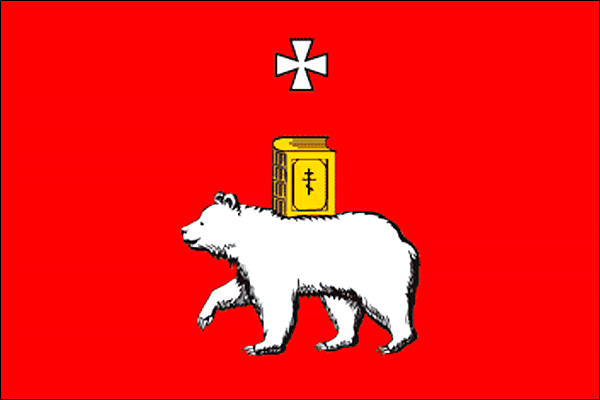
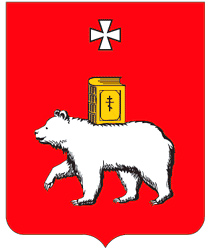
In 1780, Empress Catherine II signed a decree on the creation of a town named Perm on the basis of the Yegoshikhinsky plant, which became the center of Perm Governorate. In 1783, the coat of arms of Perm was approved with the following description: “In a red field there is a silver bear, on which the Gospel is placed in a gold frame, above it there is a silver cross, meaning the savagery of the indigenous people and enlightenment through the adoption of the Christian law”. Today’s coat of arms of Perm is the same.
In 1788, the Yegoshikhinsky plant was closed due to the depletion of deposits. Copper production continued at the Motovilikhinsky copper smelter. Perm began to develop as an administrative, trade, transport, and cultural center of the Urals.
Perm in the 19th - early 20th centuries
In 1840, British geologist Sir Roderick Impey Murchison, studying vast outcrops of geological strata in the vicinity of Perm, discovered the Perm geological period named after this town. In 1842, a fire broke out in Perm, in which the entire central part of the town (about 300 houses) was destroyed. In 1863, due to the depletion of copper ore, the Motovilikhinsky plant was also closed. In the same year, the Perm cannon plants were laid downstream of the Kama.
In 1868, a population census was carried out in Perm and its environs. The residents turned out to be: 11,381 men and 8,175 women in Perm, a total of 19,556 people; in the Motovilikhinsky plant there were 4,399 men and 4,321 women, a total of 8,720 people. In Perm, there were 14 churches, up to 40 stone and 2,900 wooden houses, 353 shops.
The end of the 19th century became a period of active railway construction in Perm. In 1878, the Perm - Yekaterinburg line was commissioned. In 1897-1898, the Ural railway was connected to the railway network of European Russia. Institutions of art and culture were actively developing in Perm too. In 1874, the construction of the opera and ballet theater began. In 1896, the first movie theater was opened (the electro-theater “Illusion”).
At the beginning of the 20th century, the population of Perm, together with Motovilikha, was about 100 thousand people. In 1902, the first city power plant was opened.
In 1909, Perm was visited by Sergei Prokudin-Gorsky, a pioneer of Russian color photography. In 1909-1916, with the support of Emperor Nicholas II, he traveled to capture in color contemporary Russia, its culture, history, and modernization. In the collection of his photographs published on the website of the US Library of Congress, you can find 12 photographs taken in Perm.
Perm during Soviet times
In March 1918, a railway carriage under escort arrived in Perm with the Grand Duke Mikhail Alexandrovich (the successor to the Russian throne after the abdication of Emperor Nicholas II and, according to some opinions, the last emperor of the Russian Empire), his personal secretary, and other exiles. The Grand Duke and his secretary were allowed to stay at the hotel. On the night of June 12-13, 1918, Mikhail Alexandrovich and his secretary were abducted from the hotel, taken to the forest and killed by a group of local security officers and militiamen. Their bodies have not yet been found.
During the Russian Civil War, clashes took place in the Perm region. The Bolsheviks called the capture of Perm by the Whites and their advance to the west “the Permian catastrophe”. In the summer of 1919, the Reds began to recapture these territories. Before the retreat, the Whites burned almost all water transport on the Kama, and also blew up the railway bridge across the river.
In 1923, Perm lost its status as a regional center, since, according to the new administrative-territorial division, the Ural region was formed with the center in Sverdlovsk (Yekaterinburg).
According to the 1926 population census, the population of Perm was 84,804 people (39,968 men and 44,836 women). On November 3, 1927, Perm and the village of Motovilikha were united into one city. In 1931, Motovilikha received the status of an independent town called Molotovo. In 1938, it was re-incorporated into Perm under the name of the Molotov district (Motovilikhinsky district today).
By 1939, due to industrialization, the city’s population had more than tripled and amounted to 306 thousand people. On March 8, 1940, the city was renamed Molotov in honor of V.M. Molotov, a politician and chairman of the USSR government in 1930-1941.
During World War II, the city’s industry was reoriented towards military needs. Molotov Oblast became one of the main regions that received the evacuated population and enterprises. A total of 124 industrial enterprises were transferred to this region, of which 64 resumed production in Perm.
In 1955, the construction of the Kama hydroelectric power station was completed. On October 2, 1957, the name Perm was returned to the city in connection with the condemnation of the so-called “personality cult” that began in the USSR after Stalin’s death (Stalingrad was renamed Volgograd in 1961). In 1958, the first stage of the Perm Oil Refinery was put into operation. In 1967, the construction of the Communal Bridge was completed - an automobile-pedestrian bridge across the Kama connecting the city center with the right-bank part.
On March 18, 1965, on the spacecraft Voskhod-2, cosmonaut A.A. Leonov made the first spacewalk in the history of mankind. Before landing on Earth, the ship’s automatic attitude control system failed. P.I. Belyaev manually oriented the ship and turned on the braking engine. As a result, Voskhod-2 landed about 180 km north of Perm. After two nights in the open air, the cosmonauts were taken by helicopter to the Perm airport. The road in Perm (part of the Kazan tract), along which they were transported, was later named Cosmonauts Highway.
By 1979, the population of Perm was about 1 million people. Population growth in some years was 15% and was the largest among all cities in the Urals.
Perm in the 1990s-2000s
After 1991, the population began to decline continuously. In 2004, it fell below one million residents. Perm was able to regain the status of a city with a population of more than one million people only in 2011.
In the 1990s, the football club “Amkar” and the basketball club “Ural Great” were founded in Perm. In the 2000s, they achieved success in Russian football and basketball (Amkar played in the Premier League, was a finalist of the National Cup and a participant in the UEFA Cup, Ural Great became a two-time champion of Russia).
In 2005, Perm became the administrative center (capital) of Perm Krai, formed as a result of unification of Perm Oblast and the Komi-Permyak Autonomous Okrug.
The end of the 2000s was overshadowed by several tragic incidents related to Perm: a passenger plane crash on September 14, 2008 (88 dead) and a fire in the nightclub “Lame Horse” on December 5, 2009 (156 dead and 78 injured).
Pictures of Perm
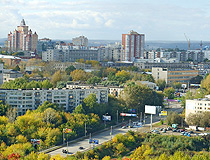
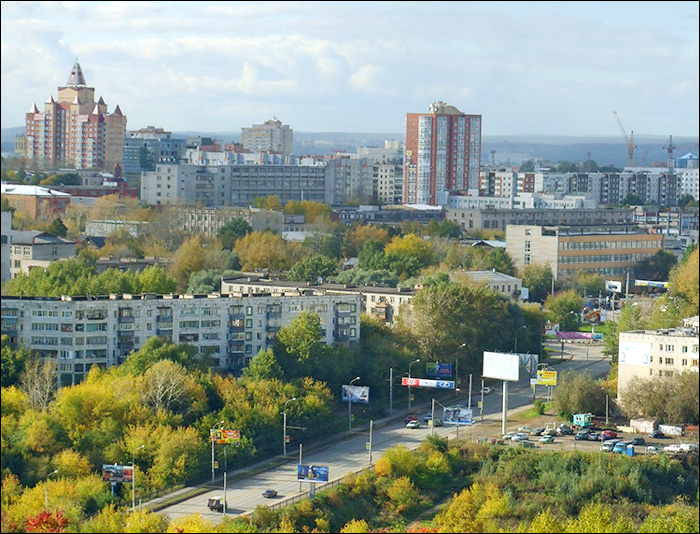
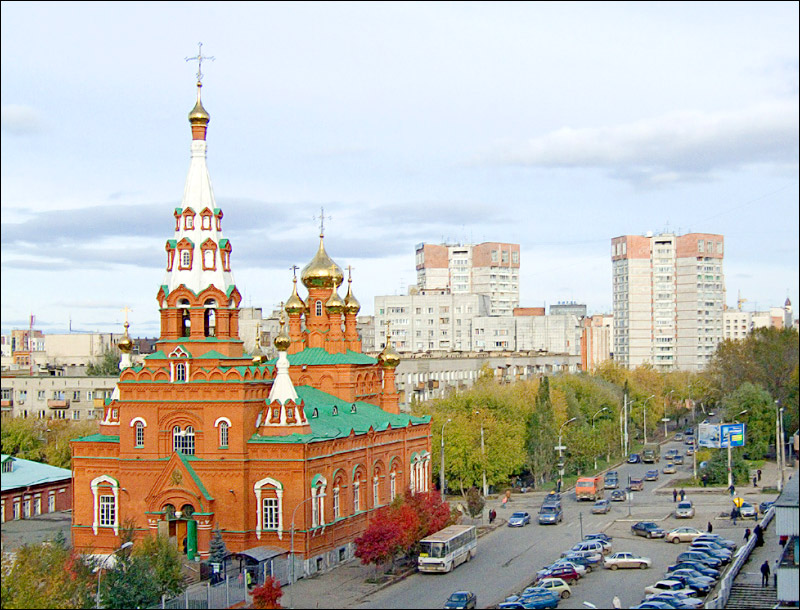
Perm cityscape
Author: Valery Bukirev
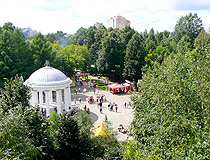
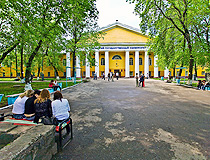
Rotunda in Gorky Park in Perm
Author: Prokhor Shuchalov
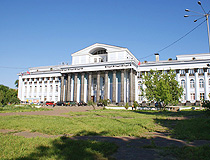
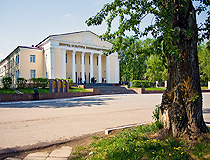
The Palace of Culture named after Lenin in Perm
Author: Yury Baranov
Perm - Features
The districts of Perm are located relatively far from each other and are often separated by forests, because the city was formed as a conglomeration of settlements scattered along the banks of the Kama River. Therefore, Perm is the third largest city in Russia by area after Moscow and St. Petersburg. It stretches along the Kama for 70 km and ranks third in length after St. Petersburg and Sochi.
Another characteristic feature of this city is a number of small rivers flowing mainly along the numerous city ravines. Forests occupy almost half of the territory of Perm (about 400 sq. km.). The City Day of Perm is celebrated on June 12, simultaneously with the Day of Russia.
The word “perm” appeared in Russian language a long time ago. It was first recorded in the chronicle “The Tale of Bygone Years” dating from the early 12th century, which listed the names of various tribes. Today, most researchers of Permian toponymy think that “pera maa” (“remote, distant land”) was the territory in which the ancestors of the present Komi-Zyryans lived. In accordance with the peculiarities of the Old Russian language, the word “pera maa” was transformed into “perm”.
Thus, first the land in the basin of the Vychegda River and the tribes living on it began to be called Perm. And then this word began to be used to call the land and tribes in the basin of the Kama River - that is, the place of residence of the Permian Komi (Great Perm). Later this name spread to the entire territory of today’s Perm Krai. At the end of the 18th century, it gave the name to Perm Governorate and its capital - Perm.
The climate of Perm is moderately continental with high humidity due to the location on the river and the proximity of the Kama reservoir. Winters are snowy and long; summers are moderately warm. The average temperature in January is minus 12.8 degrees Celsius, in July - plus 18.6 degrees Celsius.
Perm plays an important role in the economy of Russia. The city’s economy is characterized, first of all, by a developed heavy industry. The leading industries are electric power generation, oil and natural gas processing, mechanical engineering, chemistry and petrochemistry, woodworking, printing, and food processing. In mechanical engineering, a significant share is made by enterprises of the military-industrial complex. One of the largest Russian bicycle manufacturing enterprises, “Forward”, is located in Perm.
This city is one of the largest transport hubs in the country. Perm occupies a particularly advantageous geographical position, as it is located in the center Russia at the intersection of the railway from Europe to Asia (the Trans-Siberian Railway) with a sub-meridional waterway to the five seas. Perm is home to the two easternmost river ports in Europe. From here it is possible to transport goods to the ports of the Baltic, White, Black, Azov, and Caspian seas.
Perm International Airport (Bolshoye Savino) offers regular flights to Moscow, St. Petersburg, Sochi, Krasnodar, Nizhny Novgorod, Novosibirsk, Rostov-on-Don, Surgut, Ufa.
All major sights, theaters and museums are concentrated in the city center, on the left bank of the Kama. It is difficult to get lost in the historic part of Perm. The city was built quite logically - wide streets were constructed parallel to the Kama River. Less significant streets and lanes connect them to each other. Perm managed to preserve a lot of architectural monuments of the 19th and 20th centuries.
Main Attractions of Perm
The Kama River Embankment - one of the main recreation places for residents and visitors of Perm attracted here by picturesque landscapes and a rich cultural life (exhibitions, festivals, art projects, installations, concerts, sports competitions, etc.). The length of the embankment is about 4 km.
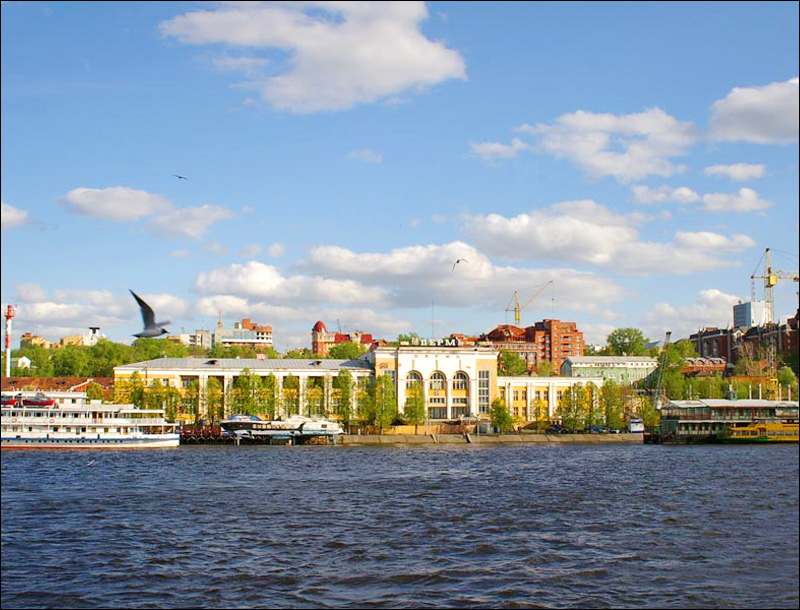
One of the attractions of the embankment is the picturesque building of the Perm River Station (Monastyrskaya Street, 2) built in the Stalinist Empire style, in which an interactive exposition “Russia - my history” is open.
Opposite the river station you can see the art object “Happiness is not far off” - one of the most recognizable sights of Perm. The two-meter red letters that make up the inscription are one of the main symbols of the city. This art object became famous in Russia when after water discharge at the Kamskaya hydroelectric power station this part of the embankment was flooded. The “floating” inscription about happiness got a lot of attention on Russian social networks.
Perm State Art Gallery. This museum has one of the oldest and most valuable collections of art objects in Russia, more than 50 thousand works of art created in the period from ancient to modern times. There are collections of Perm wooden sculpture, icons, engravings, antique ceramics, medieval painting, etc. The exposition is located in a building that is an architectural monument - the Transfiguration Cathedral (1793-1832). Komsomolskiy Prospekt, 4.
Sculpture “Permyak Salty Ears” - an urban sculpture made in the form of a circle-frame with ears, where you can place your face and take a picture. The composition also includes the figure of the photographer standing opposite, ready to take a picture with an old camera. The sculpture is located opposite the building of the hotel “Prikamye” at Komsomolskiy Prospekt, 27.
It is the traditional nickname of the residents of the Perm region. The origins of this expression go back to the 15th century, when salt began to be mined here. Salt workers often had to carry heavy bags of salt on their shoulders. From constant contact with a caustic substance, their ears were swollen and reddened.
Perm Regional Museum - the oldest and largest museum of the Perm region, which includes more than 50 collections of regional, Russian, and world significance. The main exhibition is called “The History of the Kama Region” and consists of exhibits (household items, jewelry, books) telling about the life of people who lived in Perm Krai, from ancient times to the 20th century. The museum occupies an old mansion, which is known as Meshkov’s House (a famous merchant and philanthropist). Monastyrskaya Street, 11.
A branch of this museum is the Museum of Permian Antiquities, the main exposition of which includes skeletons, fossils, scientific reconstructions of ancient animals, ores, and other paleontological and geological finds. Sibirskaya Street, 15.
Architecture of Perm
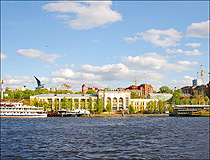
Perm River Station
Author: Dmitry A.Shchukin
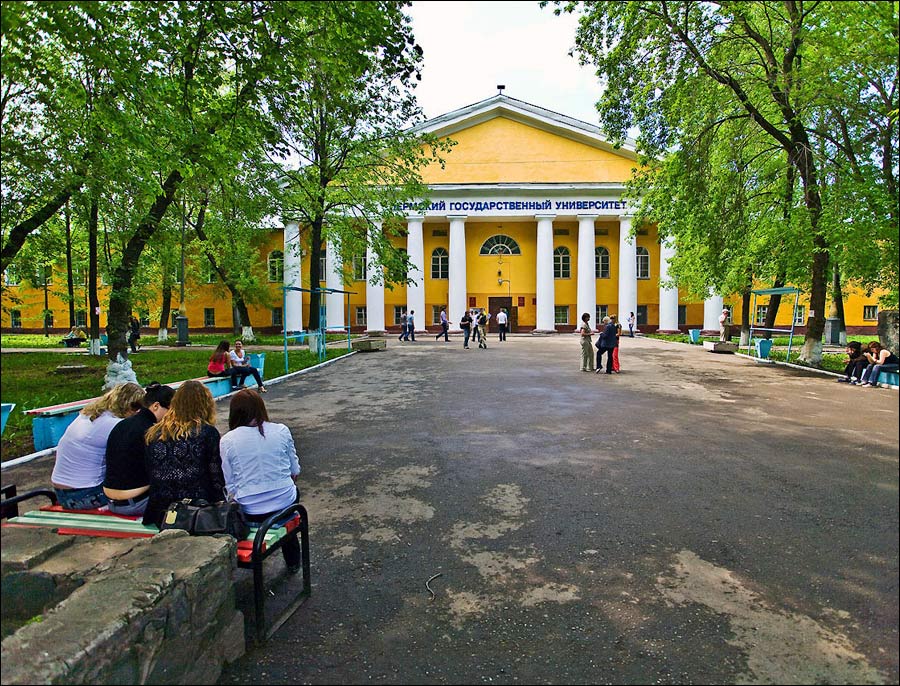
Perm State University
Author: Yuriy Chulkov
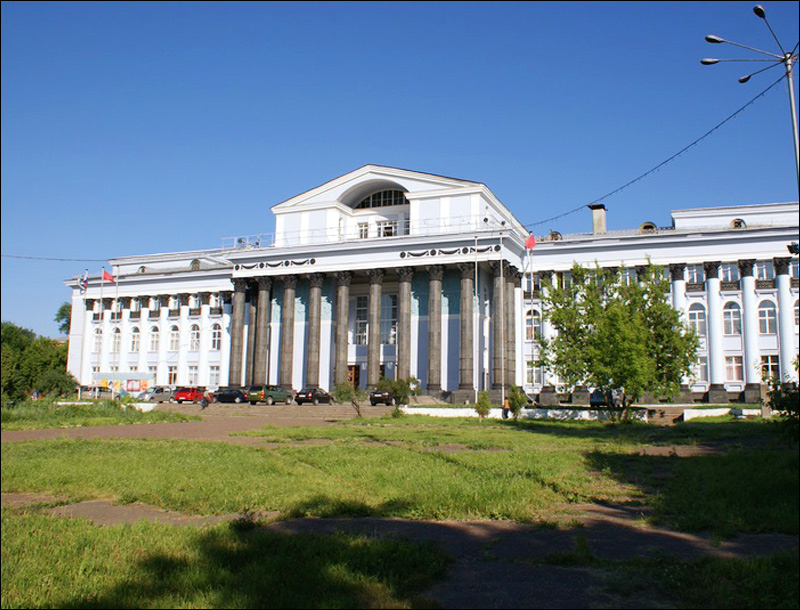
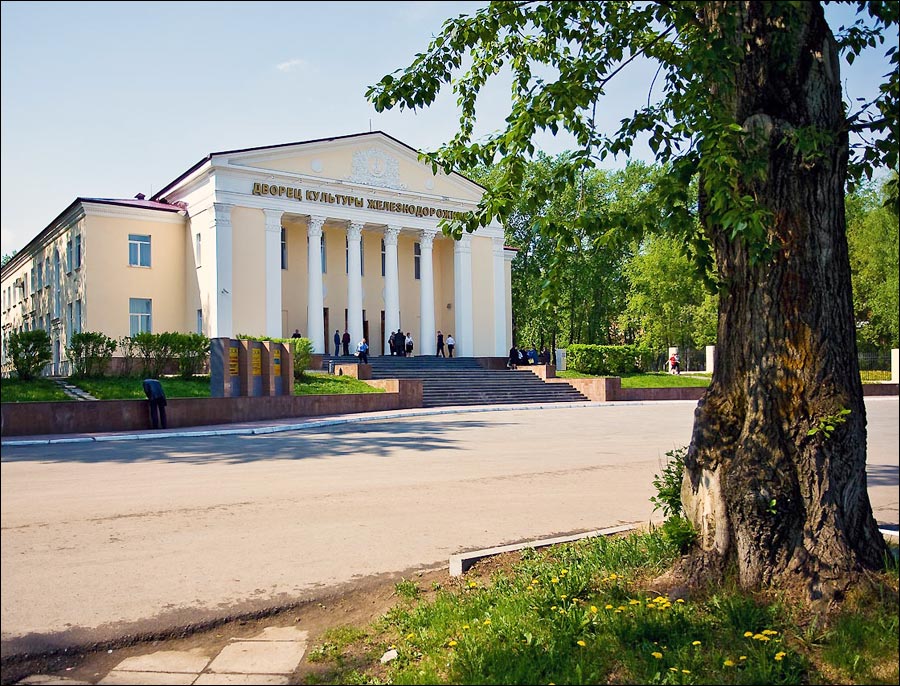
The Palace of Culture of Railwaymen in Perm
Author: Yuriy Chulkov
Museum “Motovilikha Factories”. The foundation and development of Perm was largely due to the construction of metallurgical factories in the 18th century. Then this area was called Motovilikha. The museum exposition is dedicated to the history and development of these enterprises. Part of the collection located in the open air and consisting of massive artillery pieces and rockets produced at different times is of particular interest. 1905 Goda Street, 20.
Perm Museum of Contemporary Art (PERMM) - the first museum of contemporary art in Russia located not in Moscow or St. Petersburg. The museum has exhibits united by such artistic phenomena as “Russian Poor Art”.
This term refers to works of art created by Russian artists, who work with non-artistic, non-traditional, “poor” materials: unbaked clay, sand, packing tape, foam rubber, cardboard, etc. “Russian Poor Art” reflects a powerful international trend that has already become part of the world and Russian art history. Gagarina Boulevard, 24.
Perm Esplanade. The territory of the esplanade (undeveloped, open space, wide street with alleys) runs along Petropavlovskaya Street and Lenina Street. This is one of the most popular public spaces in Perm. Festivals, celebrations, and other events are held here all year round. The central point of the esplanade is the Monument to the Heroes of the Front and Rear consisting of three standing figures: a warrior, a worker, and the Motherland. The Alley of Valor and Glory is located nearby.
Perm Central Mosque (1902-1903) - the first mosque in Perm, a beautiful monument of architecture of regional significance. The main feature of this building is its eclectic style, characterized by a harmonious combination of elements of oriental architecture and features of Russian folk architecture. Osinskaya Street, 5.
Peter and Paul Cathedral (1757-1781) - one of the oldest stone buildings in Perm erected in the Russian Baroque style at the site of the city’s foundation next to the first copper smelter. Sovetskaya Street, 1.
Perm Stefanov Holy Trinity Monastery - an impressive snow-white architectural ensemble, which is one of the most memorable architectural objects in Perm. The building of the monastery combines two architectural styles at once - Old Russian and Byzantine. It is completely different from other Perm churches and rather resembles old Moscow churches. Visimskaya Street, 4?.
Monument to the Letter P (Perm Gate) - an unusual art object installed in the park of the 250th anniversary of Perm near the central railway station on Lenina Street. The height, width, and depth of the object, consisting of 5,200 randomly fastened spruce logs, is 12 meters. The shape of the facades is made in the form of the letter “P”. Here you can also see a garden of rocks and another unusual art object - a scarab beetle rolling a large ball in front of it.
Gribushin’s House - a picturesque Baroque mansion with Art Nouveau elements, one of the most beautiful buildings in Perm. It was built for the family of one of the city officials at the end of the 19th century. In 1905, the merchant S.M. Gribushin bought the house and rebuilt it according to his taste. In 1919, the merchant’s family left Russia and the building was nationalized. Today, the Perm Scientific Center of the Ural Branch of the Russian Academy of Sciences is located here. Lenina Street, 13?.
Architectural and Ethnographic Museum “Khokhlovka”. It is located on the picturesque bank of the Kama River, about 40 km from Perm. Founded in 1969, it became the first museum of wooden architecture in the Urals. The exposition is a group of buildings dating back to the 17th - first half of the 20th centuries. Some houses have recreated historical interiors and ethnographic collections.
Belogorsky St. Nicholas Missionary Monastery. Belaya (White) Mountain (715 m) is located about 70 km from Perm. From here you can admire the views of the surroundings and the Ural Mountains, as well as a picturesque monastery with a huge Holy Cross Cathedral that can accommodate up to 5 thousand parishioners.
Kungurskaya Cave - a large karst cave with a length of 5.7 km with numerous lakes and grottoes located 90 km southeast of Perm, one of the most popular attractions of the Urals. It was discovered during the time of Peter the Great, at the beginning of the 18th century. The first accurate description and map of the cave was made by the famous historian Vasily Tatishchev. For tourists, only 1.7 km of underground passages are open.












The comments of our visitors