History of Ulyanovsk
Ulyanovsk in the 17th-19th centuries
In 1648, by decree of Tsar Alexei Mikhailovich, the fortress of Sinbirsk was founded on the right bank of the Volga River in order to protect the eastern borders of the Tsardom of Russia from the raids of nomadic tribes (Nogai Tatars), as well as to colonize the Volga region.
In the fall of 1670, Sinbirsk was unsuccessfully besieged by the army of Stepan Razin - the Don Cossack, who was the leader of the 1670-1671 uprising, the largest in the history of pre-Petrine Russia. In 1678, 1,579 people lived in Sinbirsk.
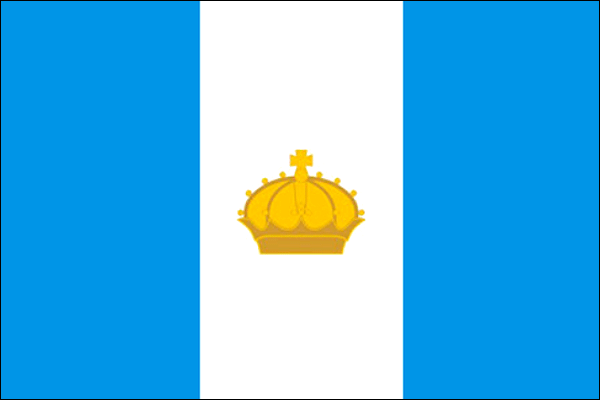
In 1729, the coat of arms of Sinbirsk was approved - a white pillar topped with a golden crown in the azure field. In 1780, Sinbirsk was renamed Simbirsk. In 1793, 13,317 people lived in this town.
In 1812, Ivan Goncharov, a famous Russian novelist and critic, was born in Simbirsk. In 1836, Emperor Nicholas I visited Simbirsk and made a lot of orders for the construction of new buildings in the town, especially in its central part. In 1840, the Simbirsk Theological Seminary was opened.
More Historical Facts…
In 1845, a monument to Nikolay Karamzin (1766-1826) was opened - the author of one of the first generalizing works on the history of Russia and a reformer of the Russian literary language, who was born near Simbirsk. Today, this monument erected in Karamzin Public Garden is one of the symbols of Ulyanovsk. In 1848, one of the first libraries in the Volga region was opened in this town - the Karamzin Public Library.
In the summer of 1864, a terrible fire occurred in Simbirsk, which lasted 9 days. Only one fourth of the town buildings survived. In 1867, the merchant Yurgens opened the first bookstore in Simbirsk. In 1870, the future “leader of the world revolution” Vladimir Ulyanov (Lenin) was born in Simbirsk. Alexander Kerensky, a prominent Russian politician and statesman, was born here in 1881. According to the 1897 census, 43.3 thousand people lived in Simbirsk.
Ulyanovsk in the first half of the 20th century
From 1908 to 1912, Igor Kurchatov, the future creator of the Soviet atomic bomb, lived in Simbirsk with his parents and studied at the local gymnasium. In 1916, the construction of the Imperial Bridge over the Volga River was completed in Simbirsk. With a length of 2,089 meters, it was the longest bridge in the Russian Empire at that time.
After the First World War and the Russian Civil War, the city’s industry was in ruin. During the war years, not a single building was constructed in Simbirsk, street lighting disappeared, boulevards and parks fell into disrepair, up to a hundred residential buildings were destroyed.
On May 9, 1924, in connection with the death of Vladimir Ilyich Ulyanov (Lenin), Simbirsk was renamed into Ulyanovsk, and Simbirsk Governorate - into Ulyanovsk Governorate. Other proposed options for the new name of the city were such as “Lenin”, “Leninsk”, “Ilyich”.
By the end of the 1930s, almost all churches in Ulyanovsk were destroyed or used for other purposes. On the eve of the Second World War, Ulyanovsk was a provincial city with a population of about 110 thousand people. There were no large industrial enterprises, with the exception of the 3rd State Plant named after Volodarsky (Ulyanovsk Cartridge Plant) - one of the oldest defense enterprises in Russia, specializing in the production of cartridges for rifled weapons.
During the Second World War, Ulyanovsk became the place of evacuation of 17 industrial enterprises from the occupied regions and the front line. The Minsk Tank School, renamed the 2nd Ulyanovsk Tank School, was relocated from Minsk, the Mogilev Military Infantry School, which became the Ulyanovsk Military Infantry School, was relocated from Mogilev. In 1942, a medical institute evacuated from Voronezh began to work in Ulyanovsk.
From October 1941 to August 1943, the Moscow Patriarchate was in evacuation in Ulyanovsk, headed by Metropolitan Sergius. From 1942 to 1945, Andrei Sakharov, the future creator of the hydrogen bomb, academician and human rights activist worked at the Ulyanovsk Machine-Building Plant.
On January 19, 1943, Ulyanovsk became the center of the newly formed Ulyanovsk Oblast. From the second half of 1941 to the beginning of 1942, the population of Ulyanovsk, due to the evacuees, doubled and amounted to more than 200 thousand people. By 1945, as a result of re-evacuation, it decreased by 50 thousand and amounted to 152 thousand people.
Ulyanovsk after the Second World War
In the post-war period, Ulyanovsk became an industrial city. In 1953, during the construction of the Volga cascade of hydroelectric power plants, part of Ulyanovsk was included in the flooding zone of the Kuibyshev reservoir. In 1957, the Ulyanovsk airport was built. Since the 1960s, thanks to the high rates of housing and industrial construction, Ulyanovsk began to grow rapidly both in area and in population. On May 5, 1967, the 300,000th resident of the city was born.
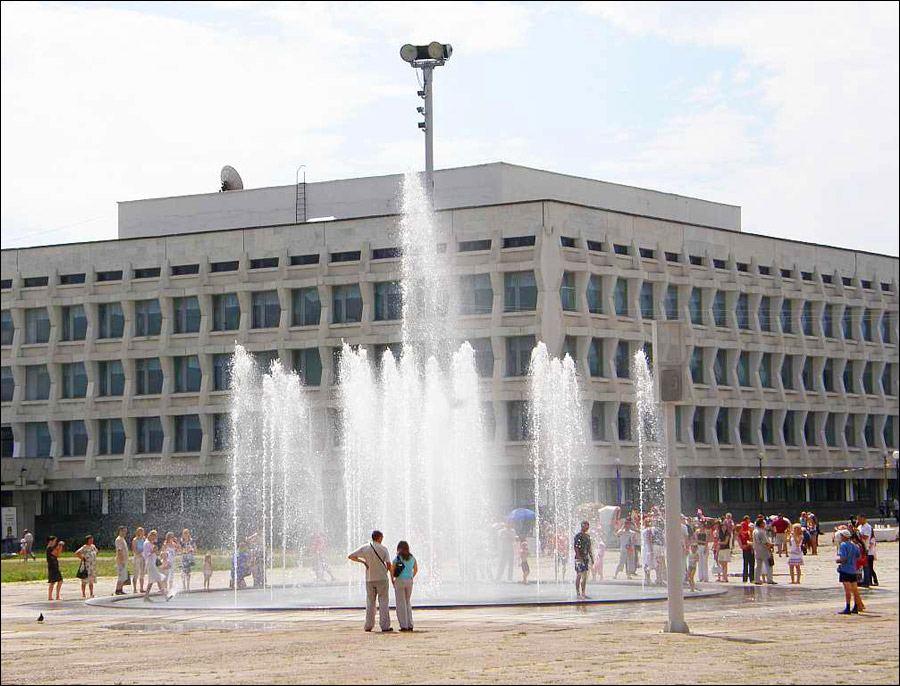
In the 1969-1970s, in honor of the celebration of the 100th anniversary of the birth of Vladimir Lenin, the historical center of Ulyanovsk was built up with modern buildings: the hotel “Sovetskaya”, the House of Artists, the Memorial Center of Vladimir Lenin, the hotel “Venets”, the new railway station Ulyanovsk-Tsentralny, the new river station, the central airport Ulyanovsk-Tsentralny, the central department store, the central bus station, the Palace of Pioneers, the park “Friendship of Peoples”, etc.
With the construction of the Memorial Center of Vladimir Lenin, Ulyanovsk became one of the main tourist centers of the USSR, after Moscow and Leningrad. The city was not closed to foreigners, which distinguished it from many other industrial regional centers, but foreign tourists were not allowed to deviate from the route. On June 1, 1973, the 400,000th resident of Ulyanovsk was born. On April 16, 1982, the population of Ulyanovsk exceeded 500 thousand people.
On June 5, 1983, in Ulyanovsk, the river cruise ship “Alexander Suvorov” crashed into the railway bridge across the Volga (the Imperial Bridge). By mistake of the crew, the ship tried to pass under the non-navigable span of the bridge. As a result, more than 170 people died. The large number of casualties is explained by the fact that at the time of the collision, most of the passengers were in the movie theater and on the dance floor on the upper deck, which was completely destroyed by the collision with the bridge girder.
On July 17, 1987, the 600,000th resident of Ulyanovsk was born. The city’s tourist significance declined sharply after the collapse of the USSR. In 1998, Ulyanovsk celebrated its 350th anniversary.
In the 2000s, there was a discussion about the reverse renaming of the city to Simbirsk, but the residents of Ulyanovsk for the most part did not support this proposal. In 2009, the arches of the old railway bridge were replaced. On November 24, 2009, the Presidential Bridge across the Volga was opened, the second longest in Russia, with a length of about 6 kilometers.
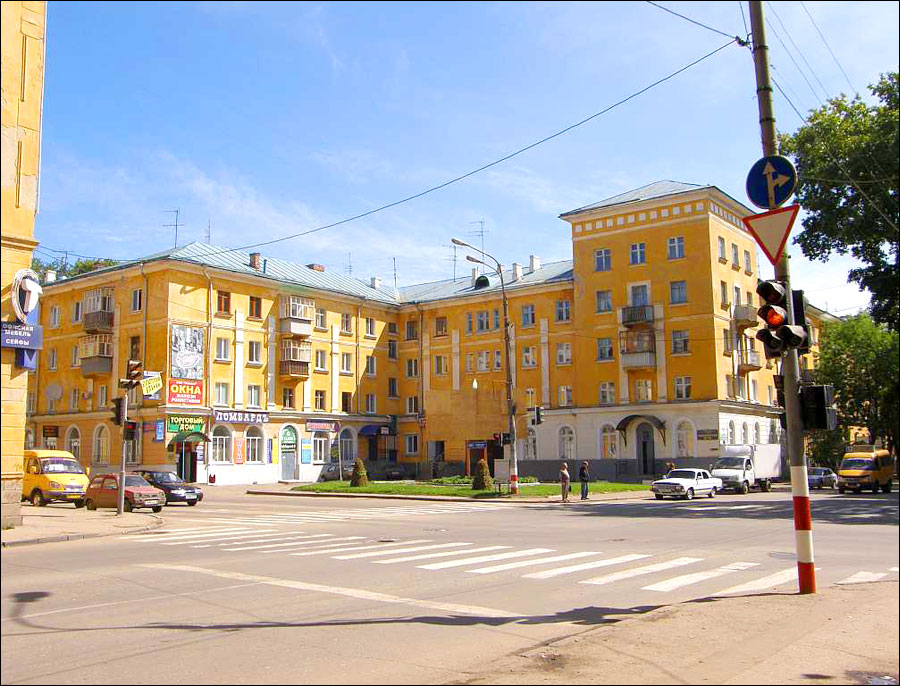
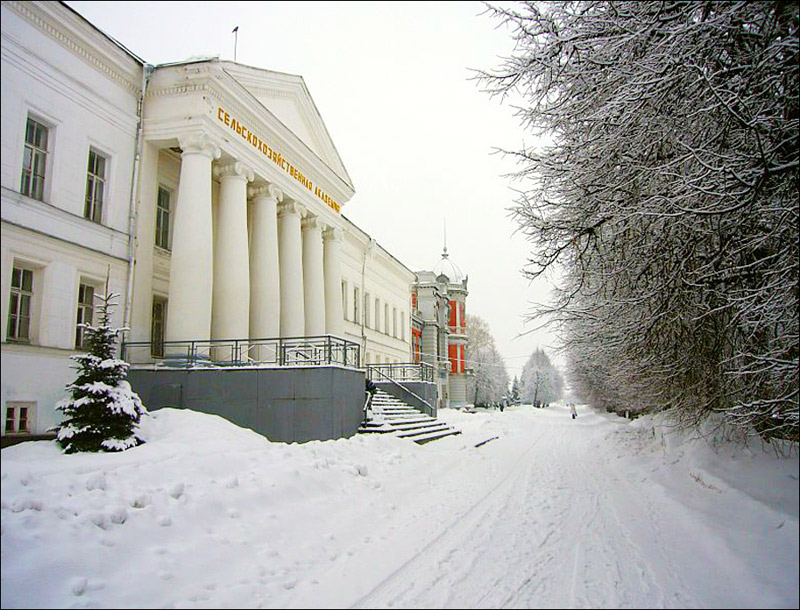
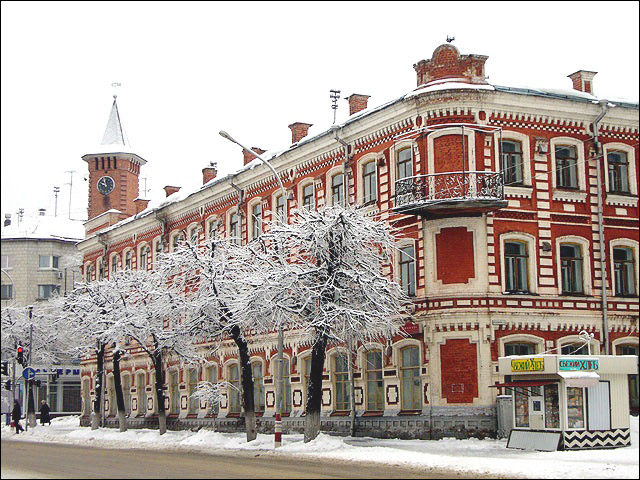
Streets of Ulyanovsk
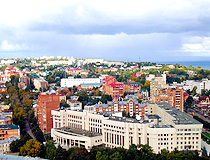
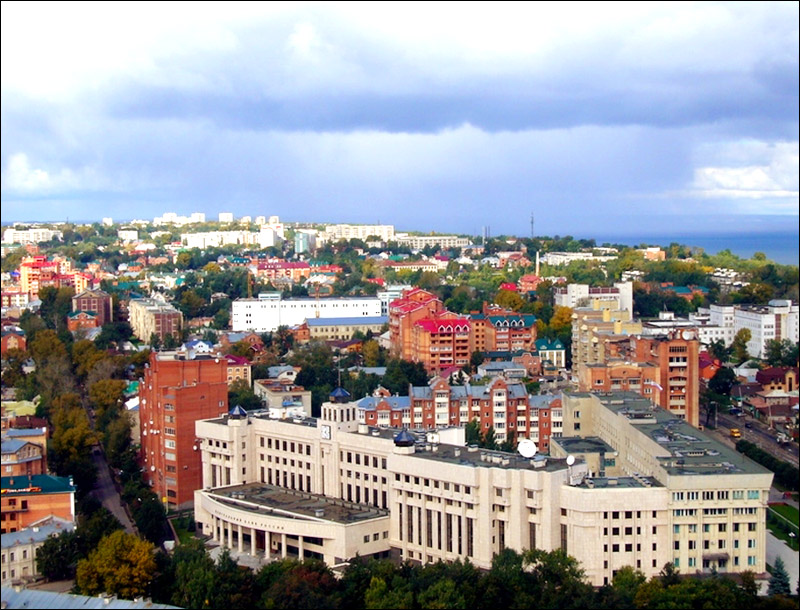
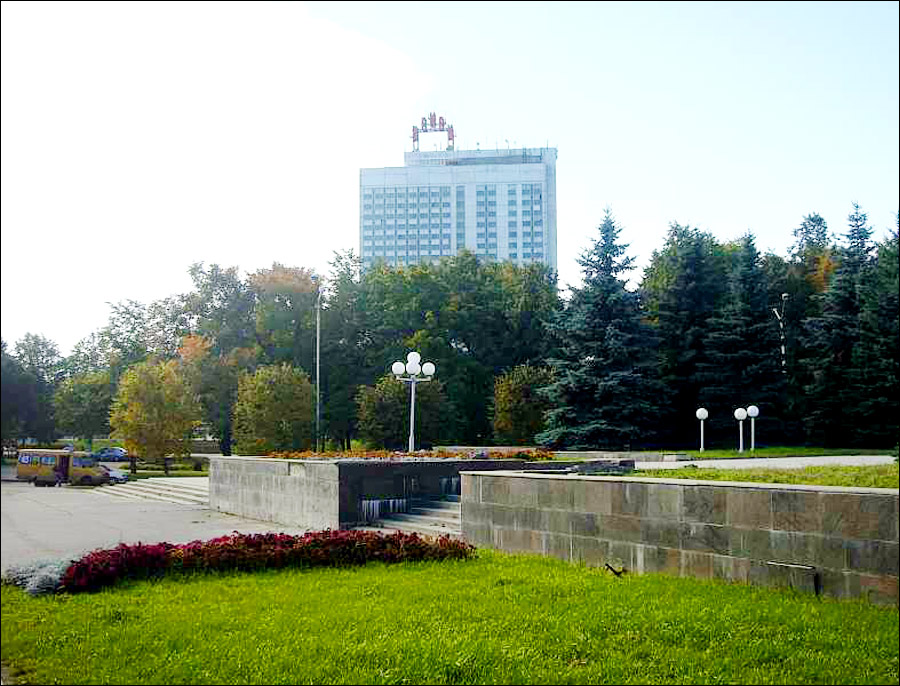
General view of Ulyanovsk
Author: Vladimir Kropotin
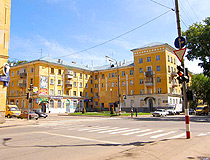
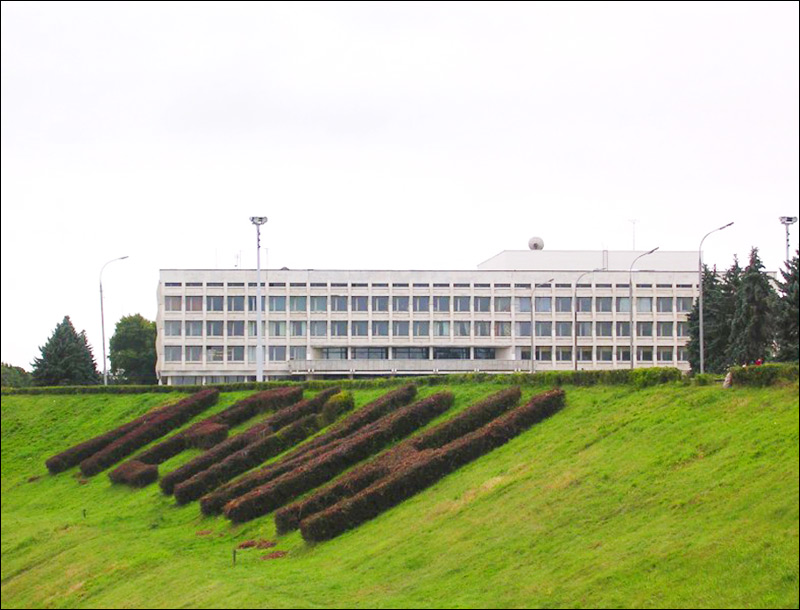
Soviet architecture in Ulyanovsk
Author: Vladimir Kropotin
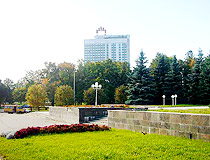
Hotel Venets in Ulyanovsk
Author: Vladimir Kropotin
Ulyanovsk - Features
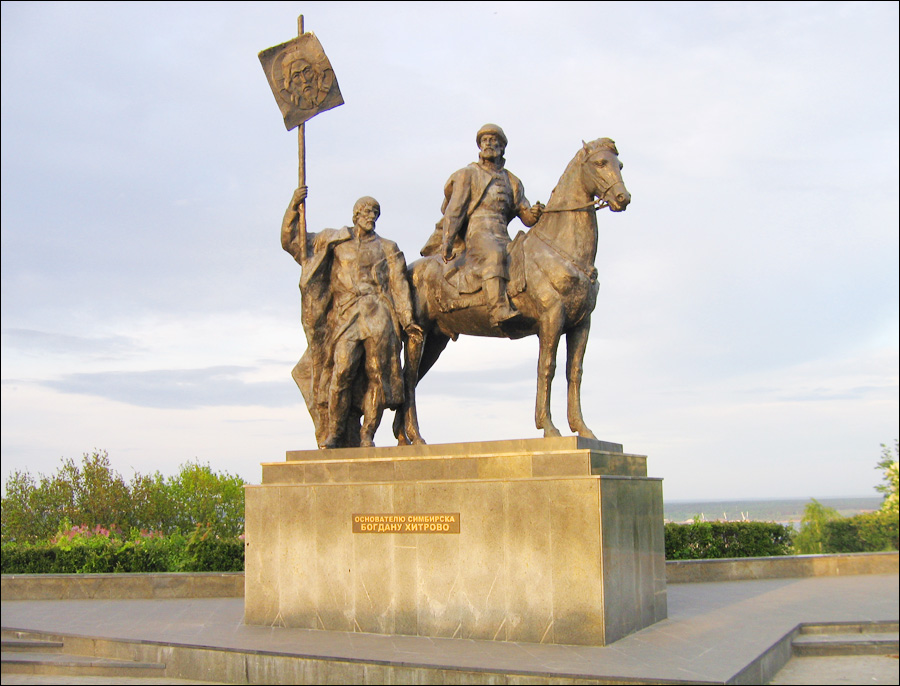
From 1648 to 1780, the name of Ulyanovsk was Sinbirsk, and from 1780 to 1924 - Simbirsk. This name was given to the town by its founder, Bogdan Khitrovo, after the name of the settlement of Sinbir (named after the Bulgarian prince Sinbir), the remains of which were located nearby. In 1924, after the death of Vladimir Ulyanov (Lenin), Simbirsk was renamed into Ulyanovsk.
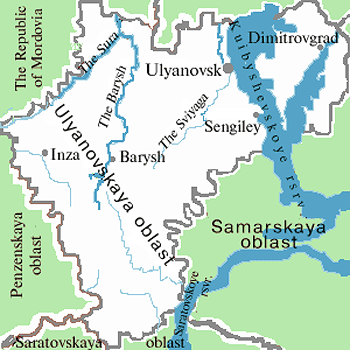
Ulyanovsk is located in a forest-steppe zone on the Volga Upland, on both banks of the Volga River (Kuybyshev Reservoir). The climate is moderately continental. The average temperature in February is minus 10.4 degrees Celsius, in July - plus 20.2 degrees Celsius. A characteristic feature of Ulyanovsk is the constant winds blowing from the Volga.
This city is a major transport point, lying between central Russia and the Urals. Neighboring regional centers are three to five hours away by car. There are two international airports near the city - Ulyanovsk-Central (ULV) and Ulyanovsk-Vostochny (ULY).
The banks of the Volga in Ulyanovsk are connected by two bridges. The old railway bridge was officially opened in 1916 and was named “Imperial of His Majesty Nicholas II”. In 1917, it was renamed Freedom Bridge. In 2009, it again began to be called “Imperial Bridge”. The new bridge (also called “Presidential Bridge”) was commissioned on November 26, 2009.
Public transport is represented by trams, trolleybuses, buses, and minibuses. In Ulyanovsk tram lines are located exclusively in the right-bank part of the city and trolleybus lines are in the left-bank part. In the last years of the USSR, it was planned to build a subway in Ulyanovsk.
It is a multi-ethnic city. The ethnic composition according to the 2010 All-Russian Population Census: Russians (77.65%), Tatars (12.64%), Chuvash (5.02%), Mordovians (1.4%). The economy of the city is based on the enterprises of the automotive industry, engine building, aircraft building, instrument making, machine building, and metalworking.
Ulyanovsk has a high potential for the development of the tourism industry. The tourist image of Ulyanovsk as “The Birthplace of Vladimir Lenin” is supplemented with some new ones now: “Russian provincial town of the 19th century”, “Homeland of Oblomov”, “Architectural Museum in the Open Air”.
The City Day of Ulyanovsk is traditionally celebrated on the second Sunday in September.
Main Attractions of Ulyanovsk
Lenin Memorial - a whole museum complex dedicated to Vladimir Ulyanov (Lenin) and his family. This is one of the largest historical and museum complexes in the Volga region. The main building was constructed for the 100th anniversary of Lenin’s birth in 1970.
This is the only museum in the world that reflects the entire life of Lenin. It has more than 70 thousand exhibits including authentic belongings of the Ulyanov family, documents, photographs, and other items related to different periods of Russian history. Lenin Square, 1.
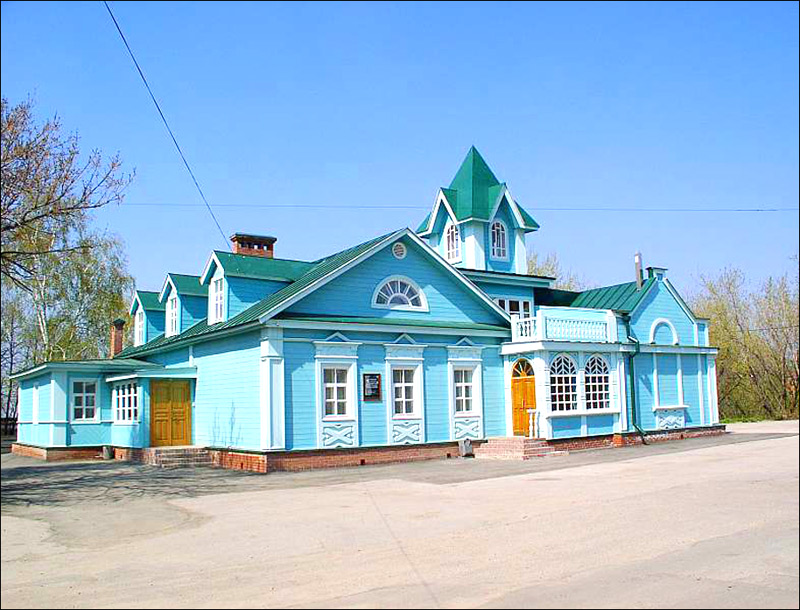
House-Museum of Vladimir Lenin. The exhibition of this museum is located on the territory of a wooden estate - a monument of urban architecture that belonged to the Ulyanov family at the end of the 19th century. Lenin spent his childhood and youth here. Lenina Street, 68.
Novy Venets Boulevard - a pedestrian street in the center of Ulyanovsk located on the highest point of the city. From here you can see the Volga, Imperial Bridge, and city districts. The boulevard was finally built up in the 1960s. The construction of many buildings was related to the celebration of the 100th anniversary of Lenin’s birth.
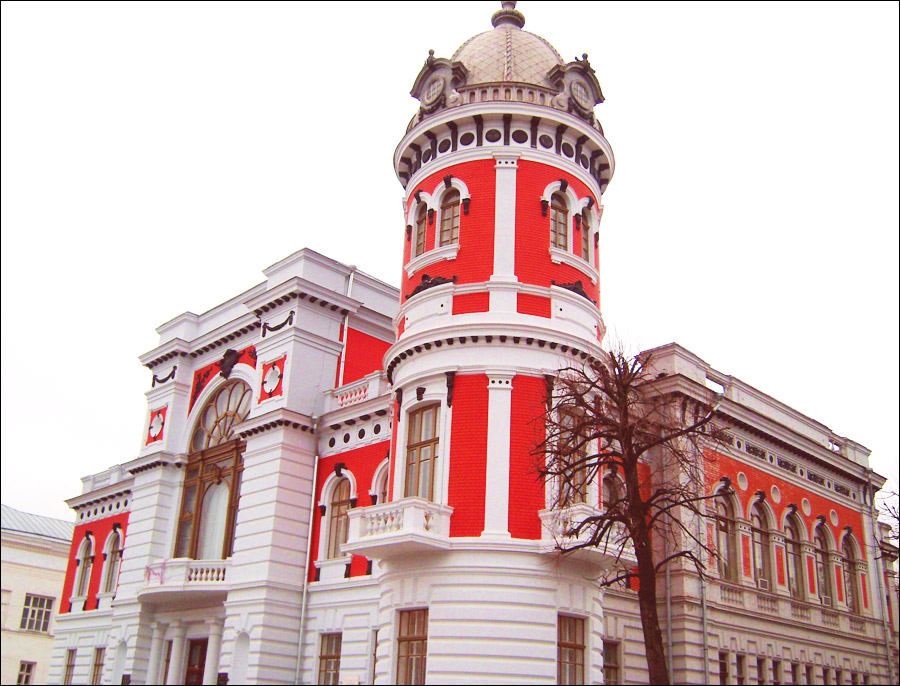
Museum of Local Lore named after Ivan Goncharov. This museum occupies a beautiful mansion with an elegant tower built as a monument to the great Russian writer Ivan Goncharov. The exhibition halls display archaeological artifacts and fossils. A significant part of the exposition is devoted to the life and work of Ivan Goncharov. An interesting numismatic collection and an exhibition of folk costumes also attract the attention of visitors. Novy Venets Boulevard, 3/4.
Historical and Memorial Museum of Ivan Goncharov - a magnificent building, which is a historical and architectural sight of Ulyanovsk. In 1812, the famous Russian writer Ivan Goncharov was born in one of its rooms. The exposition occupies all three floors of the building. A separate hall is dedicated to the history of the building itself, in the remaining halls there are thematic exhibitions related to the personality of the writer and his family. There are also halls that house historical collections and a collection of merchant household items. The tower of the building houses the Museum of the History of the Simbirsk Town Clocks. Goncharova Street, 20.
Museum “Simbirsk Classical Gymnasium”. Simbirsk was one of the first Russian cities to introduce secondary education for children. The museum exposition is dedicated to the history of the development of education in the Russian Empire. It is located in a former gymnasium, where Vladimir Ulyanov and Alexander Kerensky studied at one time. Inside, the atmosphere of the 19th century has been recreated. The interiors of classrooms, halls, dressing rooms, and a gym have been restored. The building that houses the museum was constructed in 1790. Spasskaya Street, 18.
Museum “Fire Department of Simbirsk-Ulyanovsk”. The exposition of this museum is located in the 19th century building previously occupied by the town fire brigade. The museum was opened after the restoration of the building in 1979. The collection consists of pre-revolutionary and Soviet sections. In the central part there is a diorama depicting the fire of 1894 in Simbirsk. Lenin Street, 43.
Historical and architectural complex “Simbirsk Fortified Line”. At the time of the foundation of Ulyanovsk, the Simbirsk line protected the Russian land from the raids of nomads from the east. Today, you can find a unique historical and architectural museum here. It features a defensive fortress and an earthen rampart, which were restored based on historical documents and remains found by archaeologists in Simbirsk. The exposition includes examples of Russian weapons, old documents, maps, diagrams, decrees, and a model of a water mill. Leo Tolstoy Street, 43a.
Museum of the History of Civil Aviation. This museum located near the airport Ulyanovsk-Tsentralny has an airfield and 4 halls with exhibits illustrating the history of aviation from the time of the Russian Civil War to the present day. In terms of the total number of exhibits (about 9 thousand), it is the country’s largest aviation museum. One of the unique exhibits is the Tu-144 supersonic airliner. Aviatsionnaya Street, 20a.
Balalaika Museum - a unique museum with a collection of the rarest balalaikas (a musical instrument very popular in pre-revolutionary and Soviet Russia). The guests of the museum are invited to immerse themselves in the world of village music, to hear the sound of real peasant balalaikas. Here you can also taste tea made from herbs collected in the forests of the Ulyanovsk region. Bebelya Street, 19.
Savior Ascension Cathedral - a picturesque Orthodox church of sky-blue color built in the Baroque style in the 2000s to replace the demolished Ascension Cathedral (albeit in a different place). Ulyanovskaya Street, 2.
Holy Resurrection-Germanovsky Cathedral - one of the oldest churches in Ulyanovsk built in the early 18th century. During the years of Soviet power, it was closed and used as the state archive. In 2003, the building was returned to the Orthodox diocese. Gogolya Lane, 11.
House of Merchant Bokounin - a beautiful monument of wooden architecture, one of the architectural gems of Ulyanovsk. It was erected at the beginning of the 20th century on the territory of the estate of the Ulyanovsk merchant Sergei Bokounin. Part of the premises is occupied by the restaurant “Teremok”. Radishcheva Street, 4.
The Volga River (Kuibyshev Reservoir) - the largest artificial reservoir on the Volga created in the 1950s. The reservoir is 500 km long, with a maximum width of 44 km. Its powerful water resources are used to generate electricity. Due to its gigantic size, it significantly affected the Volga itself, changed the flow regime and began the processes of coastal washout. Home to many species of fish, the reservoir attracts fishing enthusiasts to its shores.