History of Birobidzhan
Foundation of Birobidzhan
The history of Birobidzhan began in 1912, when the government of the Russian Empire decided to populate the territories along the Amur Railway. Originally, the Tikhonkaya station was opened.
At the station, a village was founded, which was transformed into the working village of Tikhonkaya-Station in 1928. The population of the village was 623 people. There were 237 scattered village houses, a primary school, a post office, and a cooperative shop. This village was the base for receiving migrants and supplying the resettlement area.
In May 1928, a resolution was passed by the Presidium of the Central Executive Committee of the USSR stating that the Committee on Land Management of Jewish Workers can use the free land in the Amur strip of the Far Eastern Territory for the purpose of settlement by working Jews.
The decision of the Soviet government to choose the Tikhonkaya station for Jewish settlement was determined by several factors. The main one was the intention to strengthen the borders of the Soviet Far East due to the proximity of Japan and the possible invasion of the Chinese. The development of this region became especially important for the USSR after the Soviet-Chinese conflict of 1929 and the Japanese occupation of Manchuria in 1931.
More Historical Facts…
In the late 1920s and early 1930s, the government of the USSR was trying to improve relations with the West, and the Birobidzhan project could influence Jewish and pro-Jewish public opinion in Europe and America. The inclusion of Jews in the settlement project of the Far East was also aimed at obtaining financial assistance from wealthy Jews living abroad. In addition, it allowed to resolve part of the economic difficulties facing the Jews of the USSR.
Relocation of Jews to Birobidzhan
In April 1928, the first settlers began to arrive; in total, 856 people arrived during this year. However, because of the difficult living conditions and severe climate, this process was uneven. In the early years, a fairly large number of Jewish settlers arrived. But more than half of the settlers, who arrived in 1928-1933, quickly left the region. In total, 19,635 Jews arrived during the first six years of colonization, and 11,450 left, only 8,185 people stayed here.
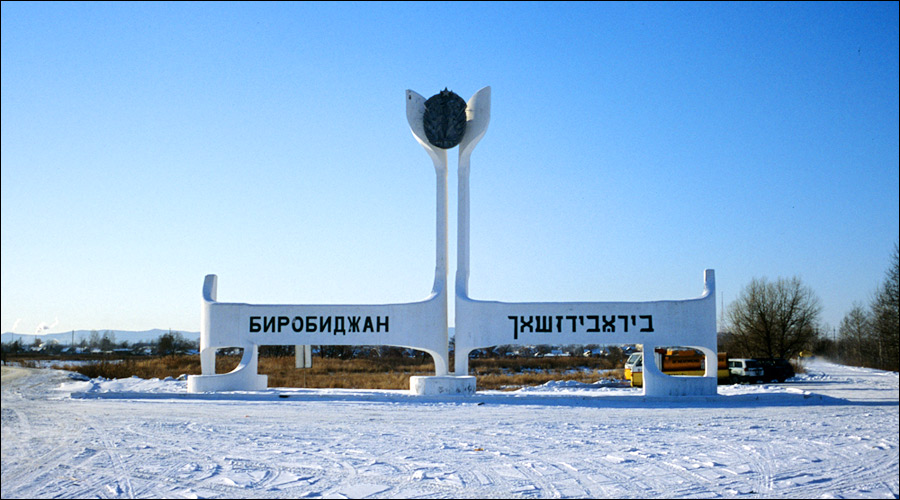
On October 10, 1931, Tikhonkaya received a new name - Biro-Bidzhan, the local name of this place between the Bira and Bidzhan rivers (in Evenki language, “bira” means a river, and “bidzhan”, “bidzhen” means a permanent camp). On July 20, 1934, the All-Russian Central Executive Committee decided to “form the Birobidzhan district with a center in the working village of Birobidzhan as part of the autonomous Jewish national region.”
As of January 1, 1932, the population of Birobidzhan was 1,216 men and 1,324 women. In the early 1930s, about 1,400 Jewish settlers arrived in Birobidzhan from abroad: the USA, Argentina, Europe, Palestine, and other countries and regions of the world. By the beginning of 1936, the population of Birobidzhan was already about 12 thousand people. The working village of Birobidzhan became a town on March 2, 1937.
In the 1930s, small enterprises of the woodworking, light, and metal industries were opened. Birobidzhan was a distribution railway center, which received goods for the entire region. In the second half of the 1930s, several public buildings were built: the House of Soviets, a teacher training college, a library, and the Palace of Culture.
Two newspapers, the Birobidzhan Star in Russian and the Birobidzhaner Stern in Yiddish, began to be published in the town, the Birobidzhan radio began to broadcast. The State Jewish Theater named after L. M. Kaganovich and a museum were opened. Birobidzhan became an important regional administrative, economic, and cultural center.
During the Second World War, 11 thousand Birobidzhanians were called up and volunteered in the Soviet Army, of which 7 thousand did not return home. In the shortest possible time, the local enterprises began production for the front: ammunition, parachutes, military uniforms, military-sanitary equipment, soap, dishes, sledges, skis, etc. In September 1941, the 60th tank division was formed in Birobidzhan. In honor of this event, a monument (the IS-3 tank) was erected in the square named after Hero of the Soviet Union I.R. Bumagin.
Birobidzhan after the Second World War
In 1946-1948, the strengthening of Jewish national identity, the difficulties faced by Jews who returned from the army and evacuation to their former places of residence, as well as the failure of the plan of settlement of Jews in Crimea led to an increase in the number of settlers in Birobidzhan. By the end of 1948, the local Jewish population increased to 30 thousand people (the largest figure in the entire history of the region).
However, the process of the new growth of Birobidzhan as a Jewish center was suspended by the end of 1948. The government of the country began to pursue a policy of suppressing Jewish cultural and social activities throughout the Soviet Union. In 1949, all Jews who gathered in the synagogue of Birobidzhan for the celebration of Rosh Hashanah (the Jewish New Year) were arrested; the rabbi was sentenced to death.
Most local Jewish writers were arrested, the Jewish theater was closed, Yiddish teaching was stopped in schools, a large number of Yiddish books were seized from the Sholem Aleichem library. The Jewish resettlement in Birobidzhan stopped, and the Jewish population of the region declined. The formation of Israel during these years also contributed to the complete loss of interest of Jewish settlers to move here.
In 1958, the Soviet government recognized the complete failure of the experiment in Birobidzhan. In the 1970s, the Jewish autonomous region was only a historical anachronism in the administrative nomenclature of the USSR. In 1984, the authorities celebrated the 50th anniversary of the region; some elements of Jewish attributes were introduced for the anniversary.
In 1989, according to the census, the Jewish population of the region was 8,887 people (4.15%), 8,038 Jews lived in Birobidzhan (9.7% of the total population of the city).
In the late 1990s - early 2000s, due to the massive departure to Israel, the US, Canada, Germany, and other countries, the Jewish population of Birobidzhan sharply decreased. According to the 2002 All-Russian Census, 2,329 Jews lived in the Jewish Autonomous Region, most of them in the city of Birobidzhan.
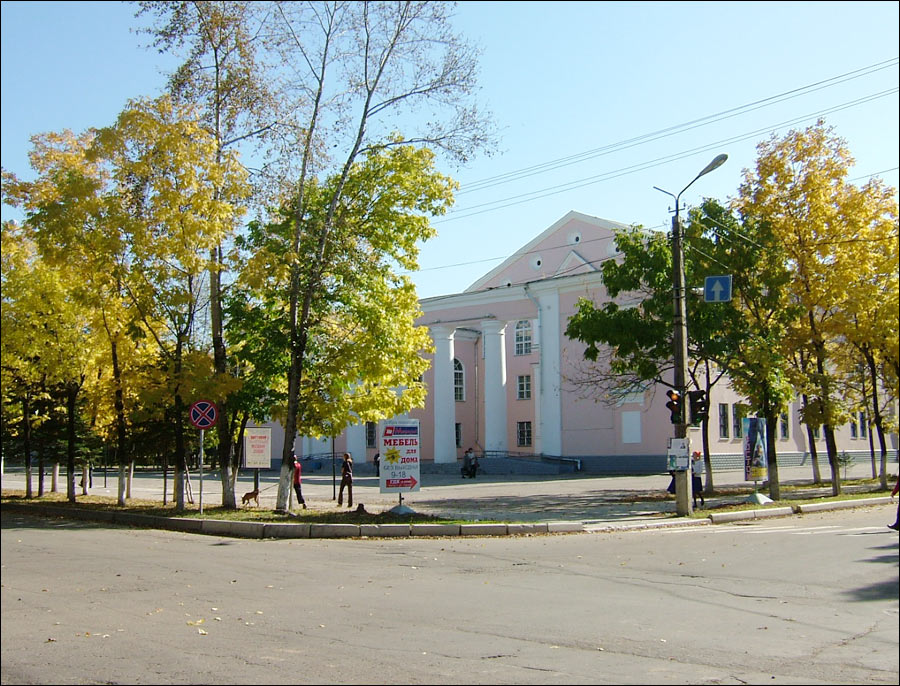
Street views of Birobidzhan
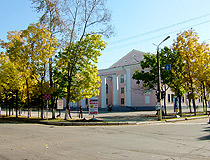
The Palace of Culture in Birobidzhan
Author: Liam Campbell
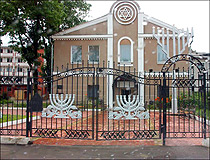
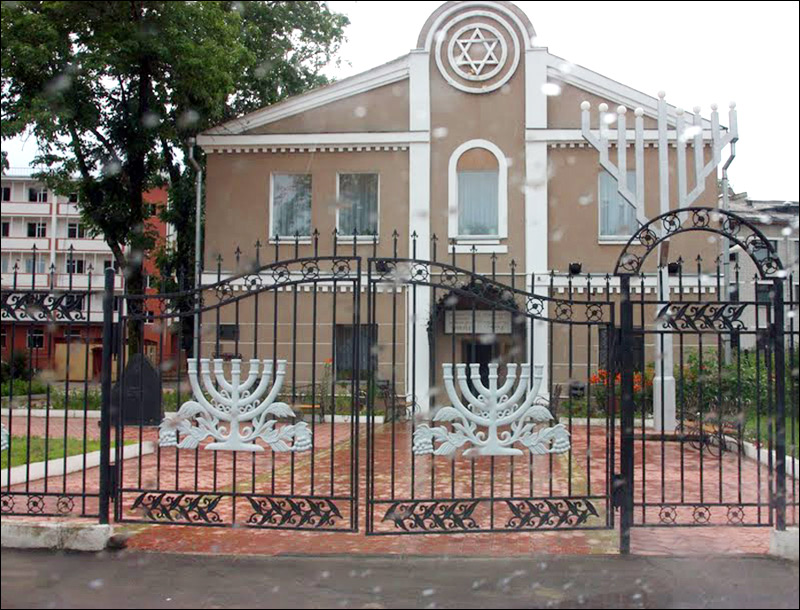
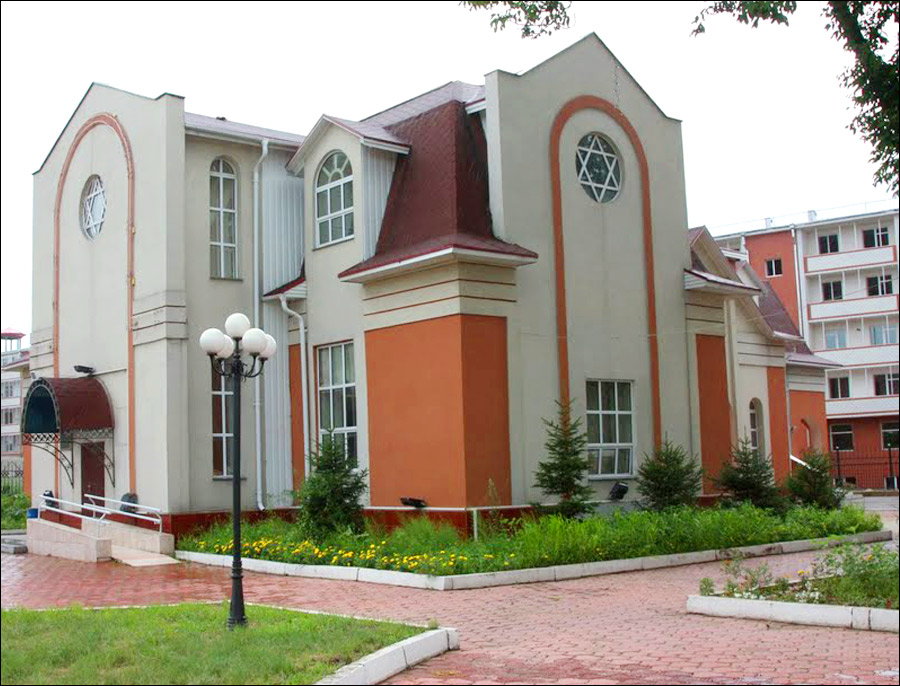
The building of the Jewish Religious Community Freud in Birobidzhan
Author: Konstantin Mogilnitsky
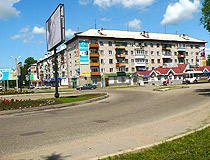
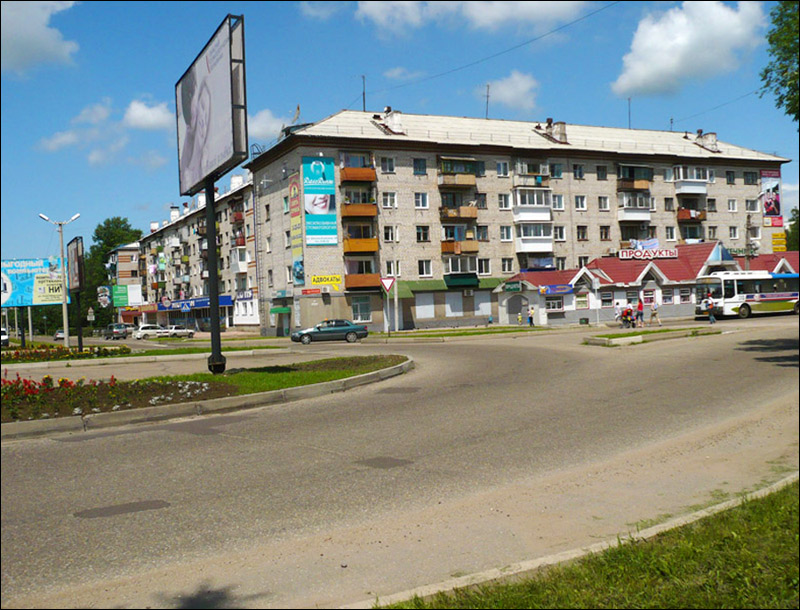
Soviet apartment buildings in Birobidzhan
Author: Vitaliy Lantsetov
Birobidzhan - Features
The city of Birobidzhan is the administrative, economic, cultural, and transport center of Jewish Autonomous Oblast. The mountain river of Bira divides it into two parts, interconnected by rail and road bridges. On the right bank there is a unique natural monument - Sopka (a hill about 220 meters high) with a television tower (95 m). The hill is depicted on the coat of arms of Birobidzhan.
It is named after the two largest rivers of the Jewish Autonomous Region - the Bira and the Bidzhan. Birobidzhan stands on the banks of the Bira. The Bidzhan flows parallel to the Bira west of the city (about 100 km) and flows into the Amur River, as well as the Bira.
Birobidzhan is located in the temperate monsoon climate zone with very cold and dry winters, hot and humid summers. The average temperature in January is minus 22.2 degrees Celsius, in July - plus 21.1 degrees Celsius.
The Trans-Siberian Railway and the M58 Amur Federal Highway running from Chita to Khabarovsk with access to Blagoveshchensk pass through the city. The nearest airport is located in Khabarovsk, from where it is best to go to Birobidzhan by train.
The city has a regional philharmonic. There are several theaters: the Jewish musical theater, the Kogelet studio theater, the Kudesnik puppet theater, the Rodina movie theater. There is also the Mazltov children’s choreographic studio, the Surprise children’s choreographic school, the Happy Childhood circus school, and the Ilanot Jewish folk song ensemble. The traditional annual festival of Jewish culture and art is held in the beginning of September.
The crime rate in Birobidzhan
Birobidzhan is the place with the highest rate of drug-related crimes in Russia. And it is a complex problem. It is a key point of transportation of drugs from the Far East of Russia and China to the western region of Russia and Eastern Europe (the only highway and railway are passing through the city).
Also, the climate of this region favors the cultivation of narcotic plants. At the same time, the region has the highest unemployment rate in the Far East. That’s why a lot of locals and foreigners are tempted to earn “easy” money by growing, producing, transporting drugs; they also use drugs, hence the crime rate is high.
Main Attractions of Birobidzhan
The main attractions of Birobidzhan are located on the left bank of the Bira River. Numerous public gardens, squares, and architectural monuments tell about the history of the capital of the Jewish Autonomous Region.
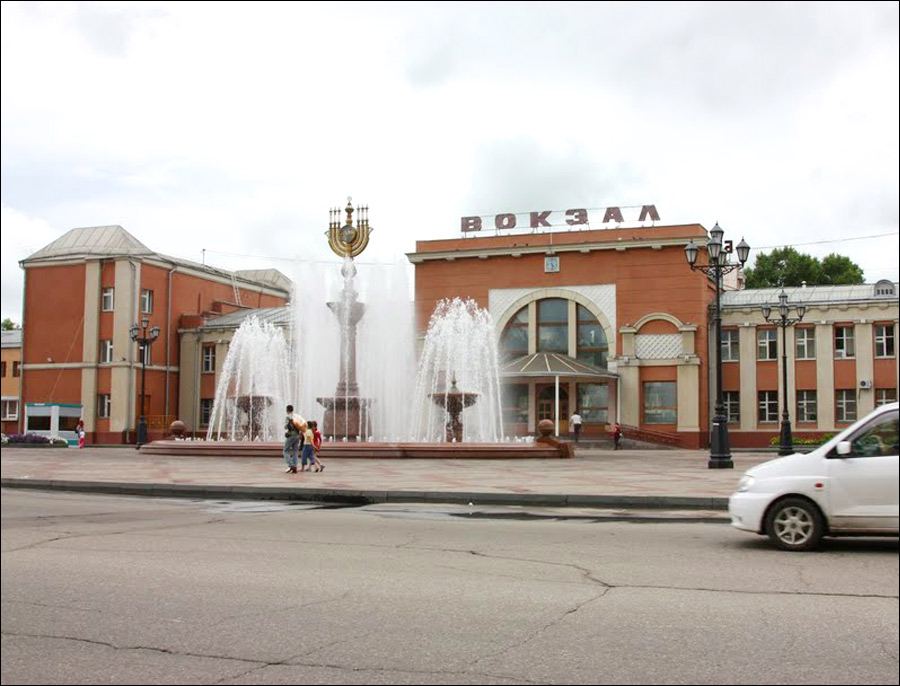
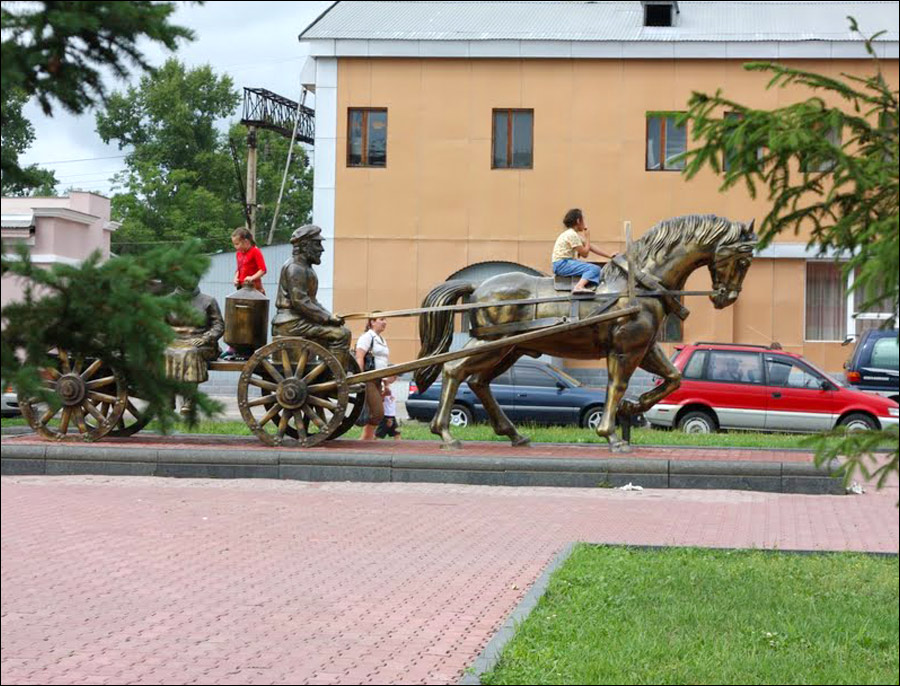
The gates of the city is Station Square (Kalinin Street, 10), where you can see a fountain with the menorah - a Jewish ritual candlestick, which is a symbol of Judaism since ancient times. There is also a monument to the first settlers of this region here.
Another interesting place is Theater Square with a philharmonic society, a light and music fountain, and flower beds arranged in the form of the menorah. Here you can see sculptures of Greek gods (patrons of art) and a bronze sculpture of a violinist.
Birobidzhan is a multinational and multi-confessional city. On Lenin Street, there is Beyt Makhakhem Synagogue (Lenin Street, 17) and the Annunciation Cathedral (Lenin Street, 34) with a unique porcelain iconostasis, the only one in the Far East.
The expositions of the Museum of Local Lore (Lenin Street, 25) tell about the history of the settlement of Jewish autonomy and the nature of the Far East, the Museum of Modern Art of the Jewish Autonomous Region (Sholem Aleichem Street, 11) has the world’s only collection of paintings on the themes of the Old Testament, the libraries of the city have collections of Jewish, Russian, and foreign literature.
The central street of Birobidzhan is named after the world-famous Jewish writer Sholem Aleichem (Solomon Naumovich Rabinovich, 1859-1916). A monument was erected to him on the pedestrian section of this street in 2004.
As a sign of friendship between the twin cities of Birobidzhan and Hegang, Heilongjiang Province of China, Friendship Square was opened near the city hall in 2002. The sculpture in the center of the square symbolizes the friendship of people, cooperation, and peace between Russia and China.
At local restaurants and cafes, you can taste a variety of dishes of Russian, Jewish, Korean, Armenian, Ukrainian, and Chinese cuisines. The city is visited mainly by tourists from China, Japan, the US, Israel, France, Germany, South Korea. Due to its convenient geographical location, tourist ties with China are most developed.
In 2010, on the anniversary of the region, an embankment was built along the bank of the Bira River in Birobidzhan, not far from which a new Wedding Palace was opened.
In the vicinity of the city there are a lot of places for hunting, fishing, and river ecotourism. The Bastak Nature Reserve, located about 35 km north of Birobidzhan, was created to preserve rare species of plants and animals including those listed in the Red Book. In the reserve, there is an eco-route (1.5 kilometers long), along which you can go with an hour-long organized tour to enjoy pristine taiga nature.
The village of Kuldur, about 130 km from Birobidzhan, is a relatively famous balneological resort with several sanatoriums. Its mineral springs are characterized by healing thermal water.









The comments of our visitors