Nizhny Novgorod Oblast - Overview
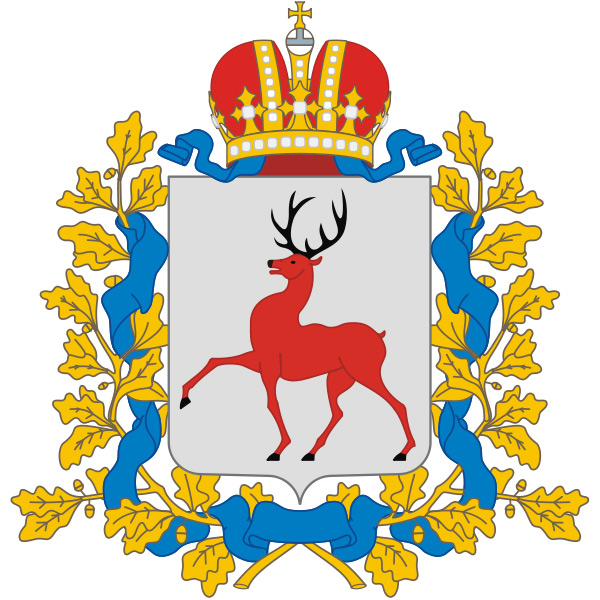
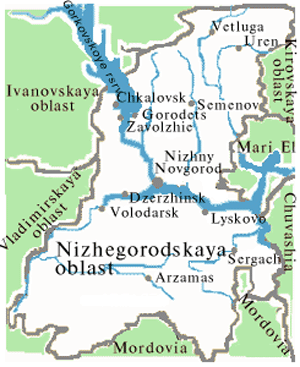
Nizhny Novgorod Oblast is a federal subject of Russia located in the central part of European Russia, in the Volga Federal District. Nizhny Novgorod is the capital city of the region.
According to the Federal State Statistics Service of Russia, the population of Nizhny Novgorod Oblast is about 3,039,400 (2025), the area - 76,624 sq. km.
Nizhny Novgorod Oblast - Features
Nizhny Novgorod Oblast is one of the largest regions of Central Russia. The length of the region from north to south is about 400 km, from west to east - about 300 km. The largest rivers in the European part of Russia flow through the region - the Volga and the Oka.
The largest cities are Nizhny Novgorod (1,234,000), Dzerzhinsk (225,500), Arzamas (102,600), Sarov (96,100), Bor (76,300), Kstovo (66,500), Pavlovo (55,300), Vyksa (52,500), Balakhna (47,200).
The climate of Nizhny Novgorod Oblast is temperate continental climate. The average temperature in January is minus 12 degrees Celsius, in July - plus 19 degrees Celsius. Winter lasts from early November to late March.
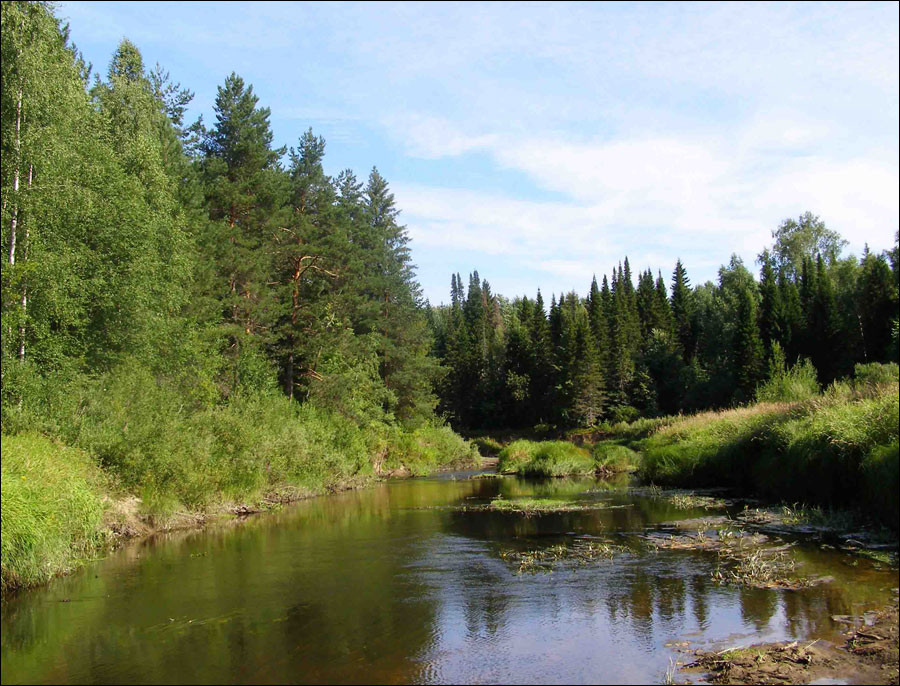
There are deposits of peat, phosphorites, iron ores. There is a large deposit of titanium and zirconium ores in the basin of the Pyana River, one of the five largest deposits of titanium and zirconium in Russia. Forests cover about 53% of the territory.
The main industries are engineering, metalworking, chemical and petrochemical industries, forestry, woodworking and paper industries. Machine-building and metal working industries produce trucks and cars, buses, automobile parts, river and sea ships, automobile and ship motors, planes, tools, gadgets, instruments, equipment for chemical, light, food industries, TV-sets etc. Art handicrafts are developed (Khokhloma and Gorodets painting).
The following crops are grown: rye, oats, barley, wheat, buckwheat, sugar beets. Potatoes and onions are grown too. Meat and milk cattle-, pig- and poultry-breeding are developed. Gorky Railway passes through the territory of the region. The rivers of Volga, Oka, Vetluga, Sura are navigable.
Attractions of Nizhny Novgorod Oblast
A lot of architectural monuments can be found in the capital city of the region - Nizhny Novgorod (Nizhny Novgorod Kremlin, Alexander Nevsky Cathedral, Stroganov Church, Staroyarmarochny Cathedral, and others).
Nizhny Novgorod Oblast has several unique natural objects: Kerzhensky reserve, Ichalkovsky reserve, Vadskoe Lake and Lake Svetloyar (according to legend, the mythical town of Kitezh is situated at the bottom of this lake).
Boldino State Literary-Memorial and Natural Museum-Reserve of A.S. Pushkin is located in the village of Bolshoye Boldino. A.S.Pushkin, the most famous Russian poet, lived and worked there.
On the left bank of the Oka River, near the city of Dzerzhinsk, a unique architectural monument is located: 128 meter steel hyperboloid tower constructed by the engineer V.G.Shukhov in 1929. This tower was used as a power support across the river.
In the town of Vyksa, on the territory of the Vyksa Metallurgical Plant, you can find unique monuments of industrial architecture and technical art. They were also constructed by V.G.Shukhov at the end of the 19th century.
The city of Arzamas is rich in architectural monuments. The Cathedral of the Resurrection (1814-1842), located on Cathedral Square, is the most famous one.
In Gorodets, one of the oldest Russian settlement in the Middle Volga, founded in the 2nd half of the 12th century, there are museums dedicated to handicrafts and craftsmanship, life and history of the peoples of the Volga region.
Holy Trinity-Makarievo-Zheltovodsky Convent is located on the left bank of the Volga, in Lyskovsky district, near the village of Makarievo. It was founded in the first half of the 15th century. Diveyevo Convent, located near the town of Sarov, is a place of pilgrimage for the Orthodox. The relics of St. Seraphim of Sarov are placed in the Trinity Cathedral of the convent.