History of Murmansk
Foundation of Murmansk
The Russians called the Normans, the ancestors of the Norwegians and other Scandinavians, “Murmans”. Later, the coast of the Barents Sea and then the entire Kola Peninsula began to be called “Murman”.
The first plans to found a port city in the Arctic Circle were developed in the 1870s. The city was founded during the First World War because the Russian Empire needed to continuously deliver military supplies from the allies in the Entente, while the Black and Baltic Seas were blocked by the Germans and Ottomans.
To get access to the Arctic Ocean through an ice-free bay, a railway was being built from Petrozavodsk to Murman, as well as a port in the ice-free Kola Bay. In 1915, on the shores of the Kola Bay of the Barents Sea, the Murmansk seaport and the seaport settlement of Semyonovsky were founded.
In 1916, it was given the status of a town with a new name - Romanov-on-Murman (in honor of the House of Romanov, the reigning imperial house of Russia, and the historical name of this region). It became the last town founded in the Russian Empire. In the spring of 1917, after the February Revolution, the town received its current name - Murmansk (“city on Murman”). The population of Murmansk was about 1,300 people.
More historical facts…
Murmansk in the first half of the 20th century
In the fall of 1917, a revolutionary committee was created in Murmansk, headed by the Bolsheviks. In March 1918, in connection with the Treaty of Brest-Litovsk, an armed landing was conducted in Murmansk from the military ships of the Entente. In 1919, power in the town passed to the anti-Bolshevik White movement. In the fall of 1919, the Entente troops were evacuated from Murmansk. In 1920, Soviet power in the town was restored. The population of Murmansk was about 2,500 people.
In the first years of Soviet power, the fishing industry was actively developed in Murmansk. In 1927, Murmansk became the center of the eponymous district within Leningrad Oblast. Murmansk had a modern fishing fleet. It also played an important role in the history of the exploration of the Arctic. In 1933, there were about 55,000 residents in Murmansk.
In 1938, Murmansk became the administrative center of a separate Murmansk Oblast. At that time, there were several dozen stone buildings in the city, including the House of Culture, the House of Trawl Fleet Fishermen’s Rest, a nautical school, several comprehensive schools, multi-storey apartment buildings for fishermen on the central street. In 1939, the population of Murmansk was about 117,000 people.
During the Second World War, Murmansk was repeatedly attacked from land and air. The German army stationed in the Arctic was supposed to capture the city and the port through which important military goods were supplied to the USSR from the Allies under the Lend-Lease program. In July and September 1941, German troops launched offensives against Murmansk, but they failed to capture it.
In terms of the number and density of bomb strikes inflicted on Soviet cities, Murmansk was second only to Stalingrad. As a result, three quarters of the buildings were destroyed. On October 7, 1944, Soviet troops launched the Petsamo-Kirkenes offensive in the Arctic Circle and the threat to Murmansk ended.
Murmansk after the Second World War
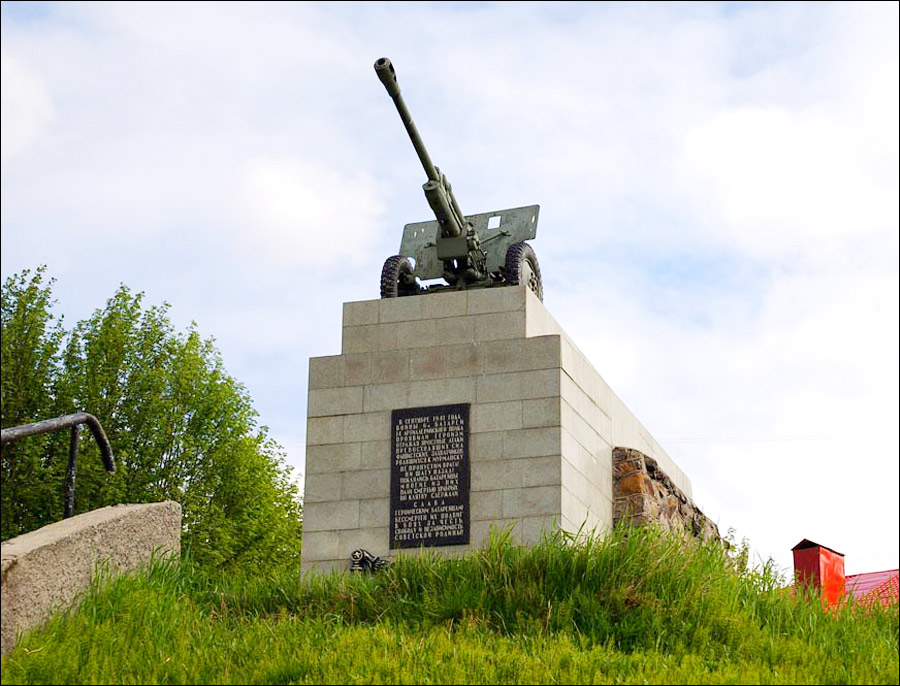
After the end of the war, several streets of Murmansk were named after the heroes of the war; monuments dedicated to the events of the war were erected on the city squares. The monument to the Defenders of the Soviet Arctic (a concrete figure of a soldier) was installed on a steep hill above the Kola Bay. It became the symbol of the defenders of the Arctic Circle.
By the end of the Second World War, Murmansk was almost completely destroyed. Only the port facilities and several stone buildings in the central part of the city survived. In November 1945, Murmansk was included in the list of 15 cities of the USSR (along with Moscow, Leningrad, Smolensk, Novgorod), the restoration of which was declared a priority task.
During the first decade after the war, industrial enterprises, mooring lines, schools, kindergartens, movie theaters, clubs, houses of culture were built. Housing construction was also carried out at a high rate. By 1952, the housing stock of the city reached the pre-war level. In 1956, the population of Murmansk was about 168 thousand people.
In 1963, the Council of Ministers of the USSR adopted a resolution “On the development of the cities of Arkhangelsk and Murmansk”, which largely predetermined the further development of the city. Murmansk grew rapidly in the late 1970s and early 1980s. In 1985, Murmansk was awarded the title “Hero City”. In 1991, the population of Murmansk reached its peak - 473,000 people.
The active construction of residential buildings in the city was interrupted in the early 1990s. In the 2000s, large hypermarkets and supermarkets were built on empty lots. In 2016, Murmansk celebrated its 100th anniversary. In the 30 years after the collapse of the USSR, the population of Murmansk declined by almost 40%.
Pictures of Murmansk
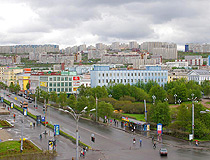
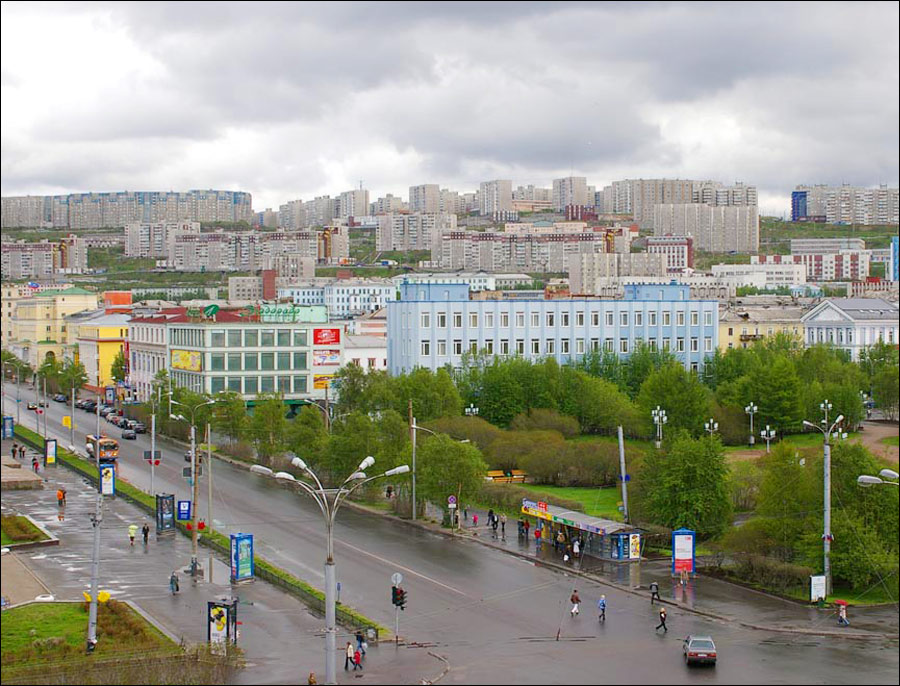
General view of Murmansk
Author: Dmitry A.Shchukin
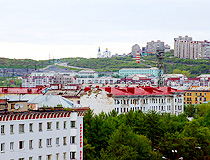
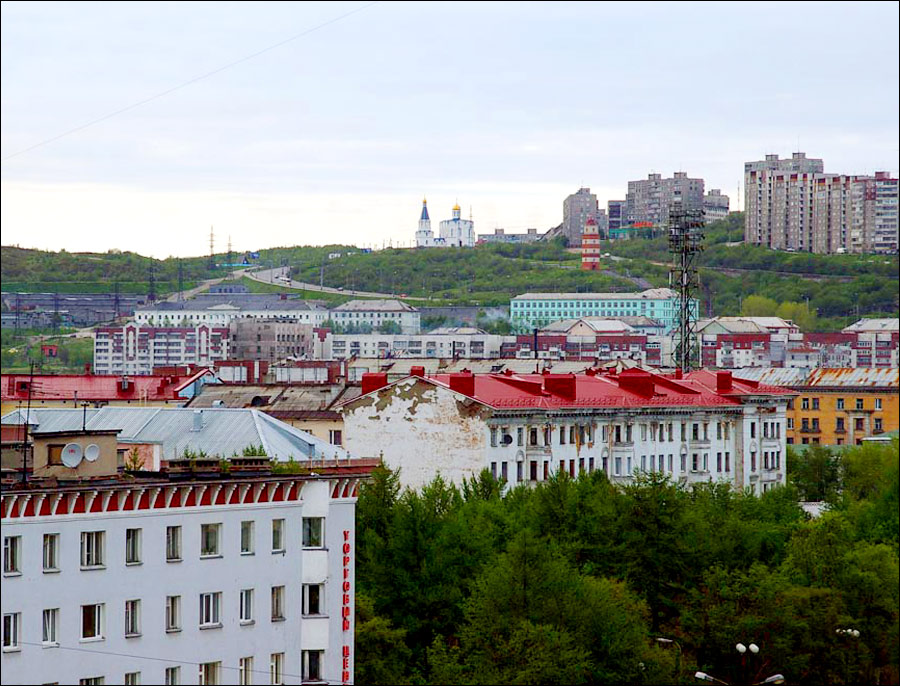
Murmansk cityscape
Author: Dmitry A.Shchukin
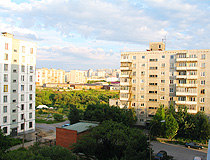
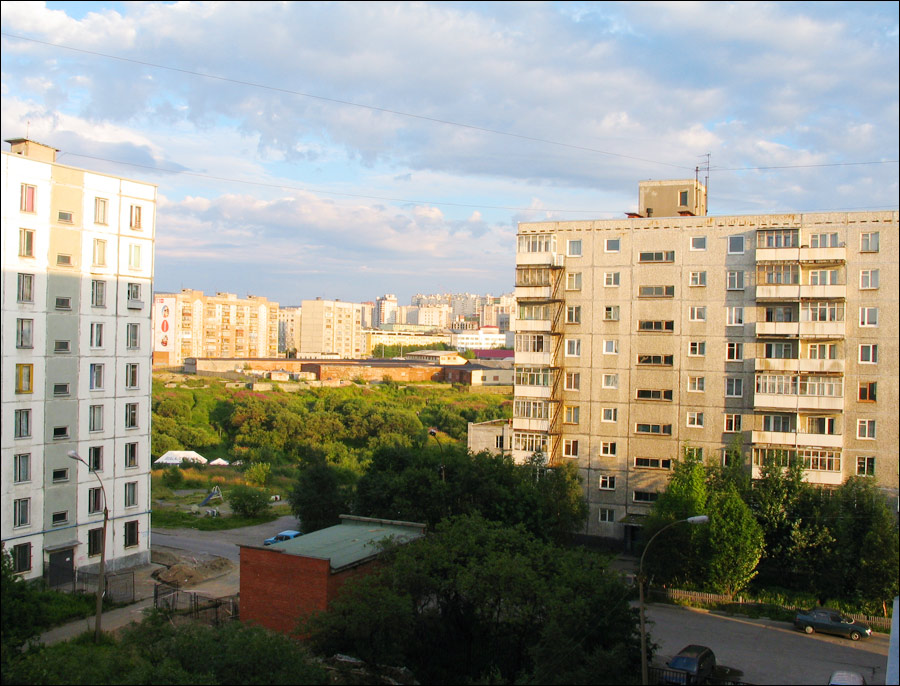
Apartment buildings in Murmansk
Author: Thomas Fuchs
Murmansk - Features
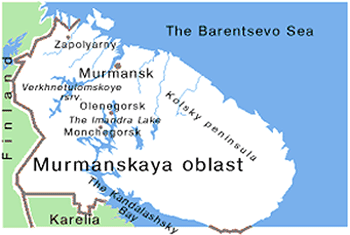
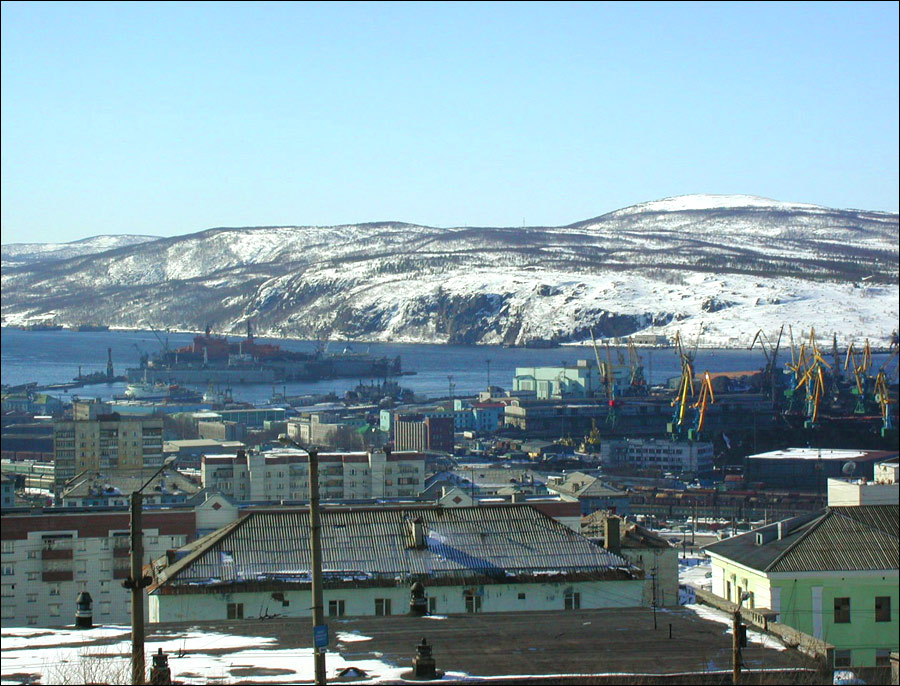
Murmansk stretches for more than 20 kilometers along the rocky eastern coast of the Kola Bay, 50 km from the open waters of the Barents Sea, about 1,350 km north of St. Petersburg. The highest point of Murmansk is an unnamed sopka (hill) on the eastern edge of the city with a height of 305 meters. The City Day of Murmansk is celebrated on October 4.
Thanks to the warm North Atlantic Current, Murmansk is an ice-free port, which favorably distinguishes it among other ports in the North and North-West of Russia. The closed city of Severomorsk, the base of the Northern Fleet of the Russian Navy, is located 20 km north-east of Murmansk.
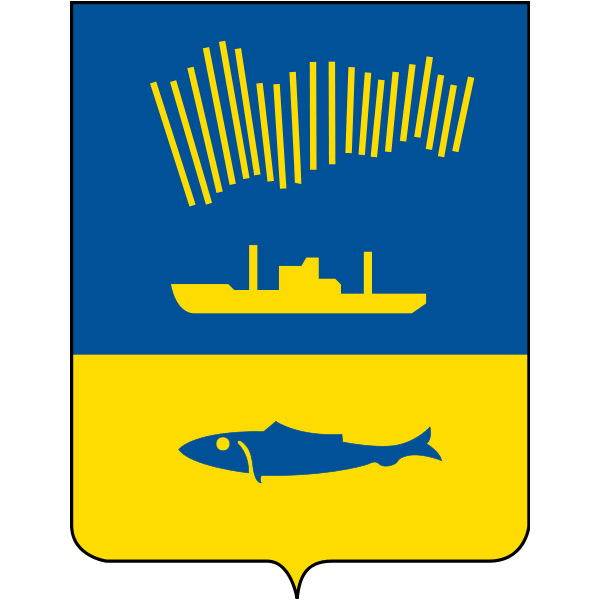
The word “murman” comes from the word “norman”, which in translation from the Scandinavian languages means “northern man”. The silhouettes of the ship and fish on the coat of arms of Murmansk mean the most popular professions of the local residents - a sailor and a fisherman. The blue color symbolizes the sea and the polar night, the gold color means the wealth of the seas and land, the polar day. The Northern Lights show the geographical location of the city.
Murmansk is located in the Atlantic-Arctic zone of temperate climate. Its climate is formed by the proximity of the Barents Sea, the influence of which is increased by the warm North Atlantic Current. This factor contributes to the strong difference between the climate of Murmansk and the climate of most cities located beyond the Arctic Circle.
The average January temperature is minus 11 degrees Celsius, July - plus 14 degrees Celsius. The polar night at the latitude of Murmansk lasts from December 2 to January 11, the polar day - from May 22 to July 22.
The city stands on the hills with strong differences in height, which determines the peculiarities of its urban planning and development. A lot of apartment houses built on slopes have stepped foundations and a varying number of storeys. The eighteen-storey business center “Arktika” (“Arctic”) with the hotel “Azimut” is the tallest building in Murmansk and the Arctic Circle (72 meters).
Nine-story panel apartment buildings are often decorated with multi-colored mosaics; painted stones can be found on the streets of the city - this is how city residents deal with color starvation. In Murmansk, white, black, and grey are the main colors in winter, which can last almost eight months.
The main sectors of the Murmansk economy are fishing, ship repair, sea, rail, and road transport, metalworking, food processing, marine geology, geological exploration on the shelf of the Arctic seas. It is the home port of all Russian nuclear icebreakers.
The Murmansk Commercial Seaport consists of three parts: Fishing port, Commercial port, and Passenger port. In recent years, there has been a tendency for the Commercial Port to displace all others due to an increase in the export of coal and a number of other mineral resources.
Despite the development of road and sea transport, most of the goods are transported by rail, mainly in the southern direction. The federal highway “Kola” (St. Petersburg - Norway) passes through Murmansk. This city is also the starting point of the road “Lotta” to Finland. Murmansk Airport, located in the village of Murmashi, about 24 km from the city, offers regular flights to Moscow, St. Petersburg, Kaliningrad, Sochi, Arkhangelsk.
Urban transport is represented by buses, mini-buses, trolleybuses. The Murmansk trolleybus is the northernmost in the world.
Main Attractions of Murmansk
Memorial “To the Defenders of the Soviet Arctic during the Second World War” or simply “Alyosha” - a memorial complex opened on the sopka (hill) Zeleny Mys in 1974 and towering 173 meters above Murmansk and Kola Bay.
The main element of this memorial complex is the figure of a Soviet soldier in a raincoat with a machine gun over his shoulder. The height of the monument is 42 meters, which makes it one of the highest monuments in Russia. The best panorama of Murmansk opens from here. Borovaya Ulitsa.
Nuclear icebreaker “Lenin” (1957) - the world’s first surface ship with a nuclear reactor. The icebreaker was built in the Soviet Union to serve the Northern Sea Route and ensure continuous navigation. In 1989, it was decommissioned and turned into a museum.
During the excursion, you can see the engine room, wardroom, dining room, medical unit, and other parts of the ship. This icebreaker has the status of an object of cultural heritage of federal significance of Russia. Portovyy Proyezd, 25.
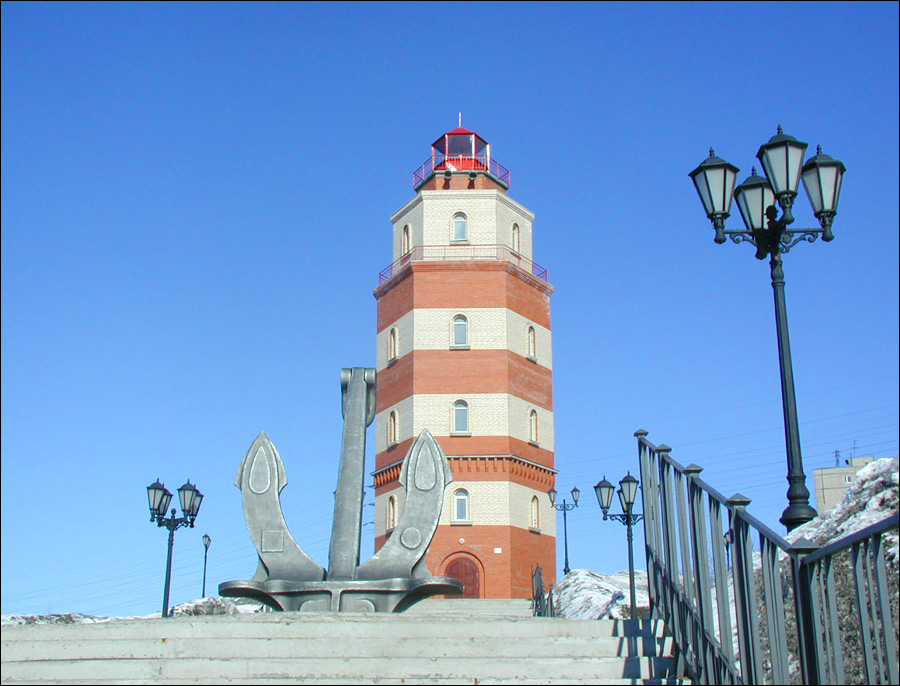
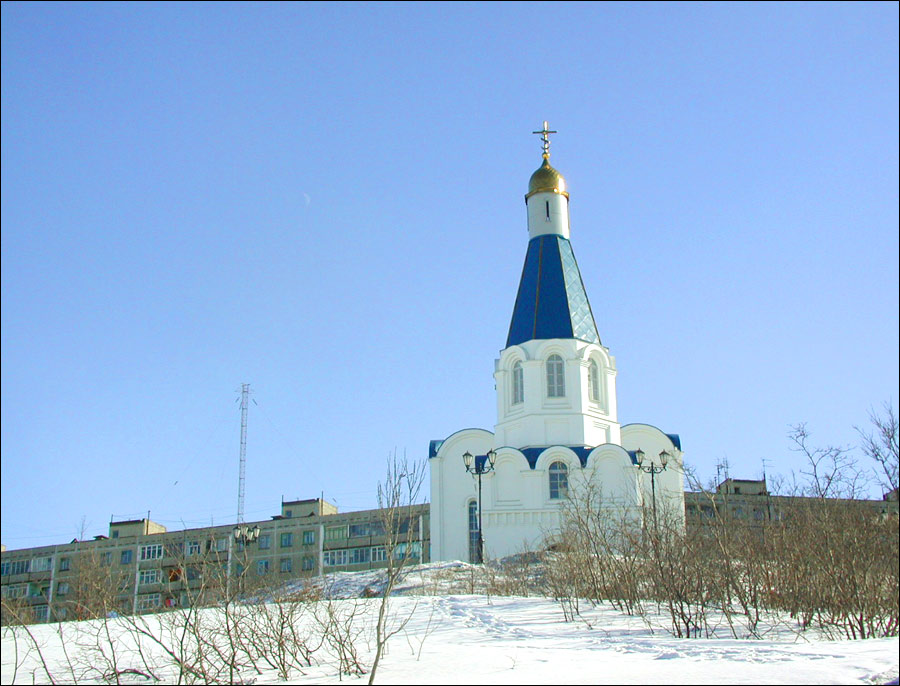
Memorial “To the Sailors Perished in Peacetime”. The architectural dominant of this memorial complex is a 17.5 m high hexagonal tower-lighthouse. The Church of the Savior on the Waters is located on the upper platform. Near the lighthouse there is a ship’s anchor with a seawater capsule laid under it.
On the first floor of the lighthouse you can find a memorial hall-museum. On June 15, 2009, next to the lighthouse, a fragment of the cabin of the nuclear submarine “Kursk” was installed - a monument to the submariners, who perished in peacetime. Verkhne-Rostinskoye Highway, 1.
Murmansk Regional Museum of Local Lore - the oldest museum in Murmansk Oblast, founded in 1926. The “Nature” section has the only exposition of the seabed in Russia - a dry aquarium. The museum has a unique geological collection recovered from depths from 100 m to 12 km while drilling the Kola Superdeep Borehole. Here you can also learn about the history of the Murmansk region from ancient to modern times. Pavlova Street, 1?.
Murmansk Regional Art Museum. This museum is located in the historic center of Murmansk in one of the oldest stone buildings in the city, next to Five Corners Square. The collection of the museum has over 10,000 exhibits.
Here you can see paintings by artists of the 18th-21st centuries, a good collection of graphics, including graphics created by Leningrad artists. A significant place in the collection is occupied by a collection of works by Murmansk artists. The section of decorative and applied arts presents examples of Russian art crafts. Kominterna Street, 13.
Naval Museum of the Northern Fleet. The museum has exhibits related to the history of the development of nuclear submarines, surface ships, and naval aviation, as well as the entire Northern Fleet of Russia as a whole.
The museum funds include about 65,000 exhibits, which are the most important part of the maritime heritage of Russia: models of ships, weapons, flags and banners, personal belongings, awards, documents and photographs of sailors, maps and works of art. Tortseva Street, 15.









The comments of our visitors